Corruption Killed The U.S. Government And The Press Was Complicit
Trump's second term corruption has caused generational and potentially irreversible damage to public safety and corporate oversight. The establishment press, with scattered exception, couldn't care less.


What if I told you that the rampant corruption of the second Trump administration had caused generational and potentially irreversible harm to the federal government, leaving key regulators powerless to stop a coming landslide of incalculable suffering, rampant fraud, and avoidable mass fatalities?
You'd think that might be a story our ad-driven engagement-hungry press might be interested in meaningfully covering given the high potential for gore.
You'd be wrong.
Trump's second term has been pockmarked by devastating Supreme Court legal rulings (like Loper Bright) that defang regulatory agencies like the FTC, FCC, and EPA, leaving them little more than decorative artifice, increasingly incapable of passing new rules or enforcing existing laws corporations may not like.
A new report by the nonprofit Environmental Integrity Project found that the EPA, for example, has simply stopped taking meaningful action against polluters on any useful scale. The action they have taken mostly involves imposing piddly settlements to close out remaining inquiries:
That represents a 76 percent decline compared to the Biden Administration’s first year, an 81 percent drop compared to the same period in the first Trump Administration, and 87 percent fewer than the first year of President Obama’s second term. Settlements of lawsuits against polluters likewise fell sharply, from 186 under Obama in 2013 to 40 under Trump in 2025, evidence that very few cases are moving forward through the traditional enforcement pipeline.
A report by Public Citizen last year found that the Trump administration had halted or dismissed 90 investigations against lawbreaking corporations within the first 100 days of being in office. Before Trump 2.0, Elon Musk's companies were facing 32 open regulatory investigations. They've all been dismissed or stalled.
At the same time, they've illegally fired Democratic FTC officials, issued dubious executive orders gutting corporate oversight, and leveraged Elon Musk's DOGE to strip-mine the government under the pretense of innovative efficiency (wasting $21.7 billion and killing hundreds of thousands of people in the process).
Collectively this brutal decimation of the regulatory state – openly telegraphed as part of Project 2025 – will have a devastating impact on everything from environmental protection and financial fraud to labor rights and basic food safety.
If an intentionally under-funded, under-staffed U.S. regulator does somehow get the crazy idea to try and actually hold a large corporation accountable, there's a very good chance they'll run face-first into a Trump-friendly circuit court.
Case in point: in 2018 AT&T was caught spying on its wireless customers, collecting their sensitive daily movement data, and selling it to a long list of dodgy assholes without consumer consent, including unregulated international data brokers (and by proxy foreign intelligence agencies).
It took until 2024 for the FCC to finally take action, levying a $57 million fine against the company. But when the FCC actually tried to collect, they ran face-first into the Trump-friendly 5th Circuit, which vacated the long-percolating fine after abruptly declaring the FCC no longer had the authority to do its job.
The U.S. press and establishment Democrats, with spotty exception, just don't find any of this very interesting or a worthwhile hill to die on. They often normalize what's happening, as we saw early on with DOGE, when many Democrats acted as if a meaningful partnership with a blatantly-corrupt kakistocracy was possible:
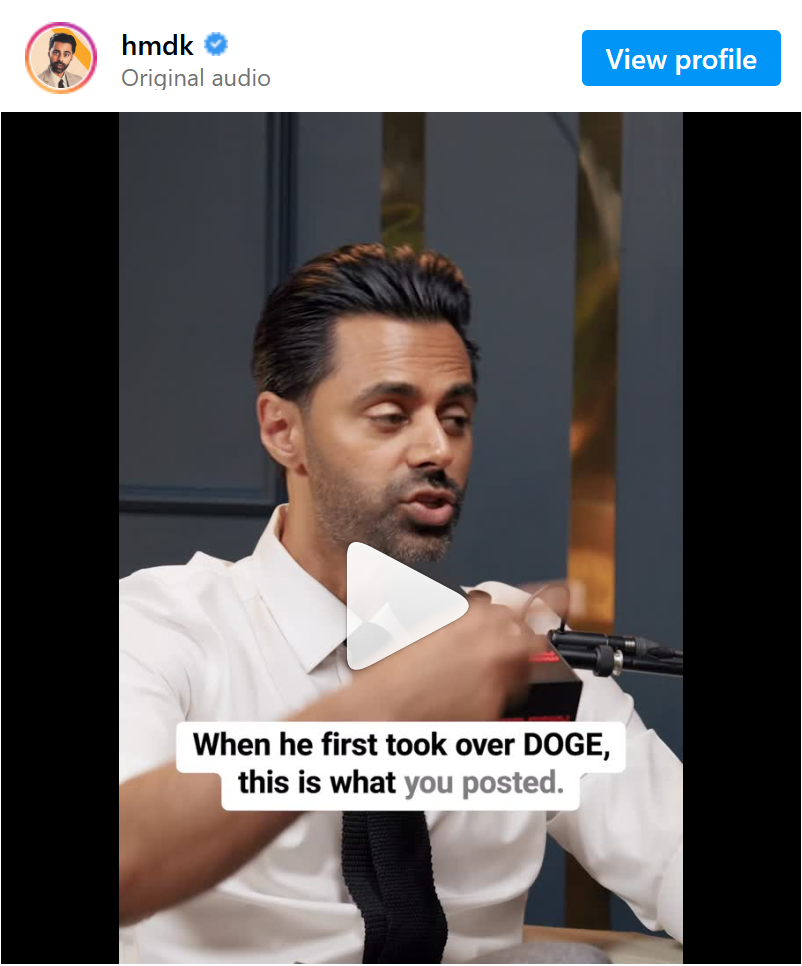
(amusing aside: Hasan Minhaj apparently forgot that I consulted with his staff for this episode of his Netflix show about shitty U.S. broadband access)
Outside of outlets like ProPublica, the U.S. corporate press generally doesn't cover the deadly, corruption-fueled collapse of the regulatory state with any seriousness. When they do, it's usually in a decidedly sterile way that downplays the harms, covers up the warts, and lulls readers into a soggy normalization coma.
When the U.S. establishment press covers regulatory issues more generally (like Tesla design malfeasance routinely causing people to be burned alive or run over in the street) they inject the pretense that our regulators still function and are somewhere hard at work plunking away in service to the public interest; that we haven't crossed any sort of new, deadly rubicon at the hands of mad zealots.
If you spend any time reading the U.S. establishment corporate press, you'll also come to eventually notice that corruption isn't a thing that exists in their coverage (something I'll be writing a lot about here).
Whether they're covering America's abysmal for-profit health care system or our substandard broadband networks, the fact that few of these things work well or in the public interest is usually ascribed to happenstance or ambiguous, causation-free partisan animus. There's an overt, collaborative allergy to acknowledging that unchecked corporate power is the central problem facing the country.
Why? Because our increasingly consolidated, corporate press is owned by a lot of affluent, right wing brunchlords that very much like what Trump is up to. They like large tax cuts, they like mindless deregulation, they like fat, unaccountable subsidies, and they love the rubber stamping of their latest terrible mergers.
One of my favorite Bluesky users (editor Michael Tae Sweeney) routinely posts this graphic whenever somebody seems surprised about why the media never quite seems capable of covering Trump honestly:
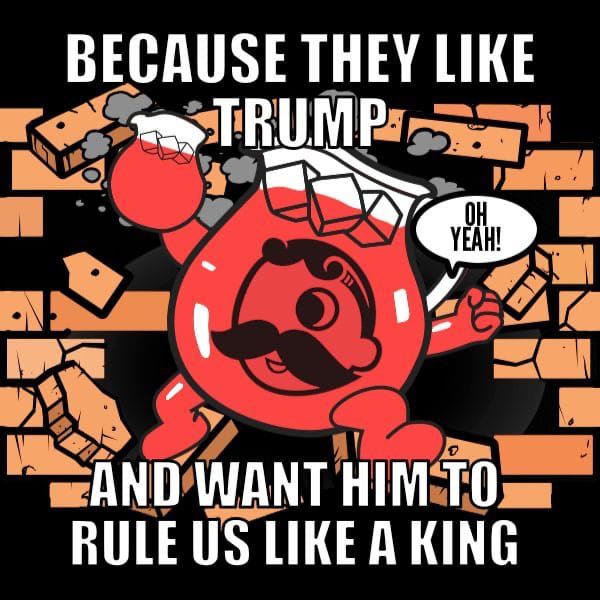
Ownership bias relentlessly creeps into what outlets cover, how it's covered, and the kind of people they hire and maintain to write the news (despite a lot of pretense by major paper editors that there are firewalls preventing this).
With the journalism industry under relentless assault by the extraction class and facing a never-ending parade of brutal layoffs, the folks left at major media institutions are less inclined than ever to challenge entrenched power structures if they like things like gainful employment or retaining health insurance.
Fortunately there are still scattered exceptions. Even some of the worst-offending outlets, like the Wall Street Journal, still occasionally employ journalists dedicated to the public interest. There's also the rise of direct-to-consumer newsletters and a lot of amazing new worker-owned media independents.
But by and large, instead of useful news about the real world, the modern U.S. press primarily produces pseudo-journalistic infotainment cack largely focused on propping up America's favorite pastime: the unbridled pursuit of wealth (Penn's Victor Pickard has a great new report on this I highly recommend).
Ultimately, the looming impact of the corrupt dismantling of the regulatory state isn't a thing that's going to be subtle. Trumpism will either try to distract and divide the public (see the trans panic) or shift the blame to others (see: Marsha Blackburn blaming Nashville's failing power grid on minorities and wokeness).
Ideally, a functional press would step in to include useful context and hold the architects of our new reality accountable. We no longer really have a functional press. We have a sorry collection of authoritarian appeasers who bared their exposed asses to the wolves at the first sign of inconvenience.
That's not to say that all is lost. In the wake of the federal government's abandonment of the public interest, numerous states are stepping in to try and fill the void on antitrust, health science, and the environment. But for every state that occasionally tries to do the right thing, there's five states whose legislatures are a blank check for entrenched corporate power.
The path out from all of this remains state-by-state, block-by-block community building, engagement, resistance, organizing, education, and tactical ungovernability. Paired with a retooling away from the self-serving algorithmic corporatist ad-engagement bile that dominates major communications platforms.
With luck and determination we can dislodge the autocrats in the next Presidential election. Though even then, one suspects that Trump's most likely replacements (Mark Kelly or Gavin Newsom) may somehow find a way to ensure that restoring corporate regulatory oversight is never quite a top priority.
I suspect much of this damage may be permanent. Or at least generational; requiring a multi-decade renaissance focused on rebuilding a government that (at least occasionally) actually serves the public interest. Peppered, prompted, and shaped by the concussive drumbeat of entirely-avoidable horrors.