Mark Zuckerberg Set $83 Billion On Fire Pretending To Be Interesting
U.S. tech billionaires are not remarkable, innovative, or even interesting. But, aided by a lazy access press, they're willing to spend vast fortunes in desperate pretense to the contrary


Much like Elon Musk and Jack Dorsey, Mark Zuckerberg has been broadly mythologized by a lazy U.S. access press that adores conflating backing ass first into immense wealth with being competent, innovative, or even interesting.
Building a giant advertising outrage slop empire that unethically prays on the worst impulses of old people certainly required some skill, but if you were to rerun history, there's zero doubt that any number of charmless trust fund manbabies would have invented Facebook in Mark's stead.
Once Mark built a giant global advertising monopoly through no shortage of unethical predation and Republican lobbying help, Zuck and friends focused on acquiring promising young companies (like Instagram) and immediately ruining them through soulless monetization.
Zuckerberg has always been positively desperate to have the public believe that this growing slop empire is a major tech innovator akin to Apple, so in late 2021, while attempting to dodge massive privacy abuse scandals, he rebranded Facebook as Meta and launched the metaverse, a clumsy effort to extend his ad monopoly into video gaming, augmented reality, video reality, and virtual spaces.
The term metaverse was adapted from Neal Stephenson’s 1992 sci-fi novel Snow Crash about a dystopian corporate hellscape. Mark wasn't interested in learning anything about the cautionary tale, because missing the whole point of key works of science fiction is, apparently, a favorite U.S. billionaire pastime.
But because Mark is not competent or innovative, none of it went very well. News emerged last week that despite burning $83 billion on the pivot, Meta would be shutting down key components of the metaverse to focus full time on pretending to be an innovative tastemaker in the ugly overlarge AI sunglasses space.
My former colleague at Vice's Motherboard, Jason Koebler, masterfully put it this way:
Zuckerberg’s bold vision of the metaverse was a place where T-Pain would sell NFTs of imaginary sneakers at concerts attended by people sitting silently in their living rooms with computers strapped to their face, where Wendy’s could do integrated brand deals in which human-shaped avatars without legs could throw baconators at basketball hoops, and where Zuckerberg could pretend to know how to surf.
CEO said a thing!
The metaverse launch would be the full calcification of what I affectionately call "CEO said a thing!" journalism, where press outlets unskeptically parrot executive claims without the slightest effort to include historical context, correction, or objective expert insights that might challenge marketing narratives.
If you go back and read the reporting about the metaverse from the access tech press at the time, an embarrassing amount was indistinguishable from advertorial or sponsored content. Countless stories credibly parroted Mark's claim that his outsized immoral slop factory was engaging in a profound and meaningful pivot that would reshape technological history and human connection:
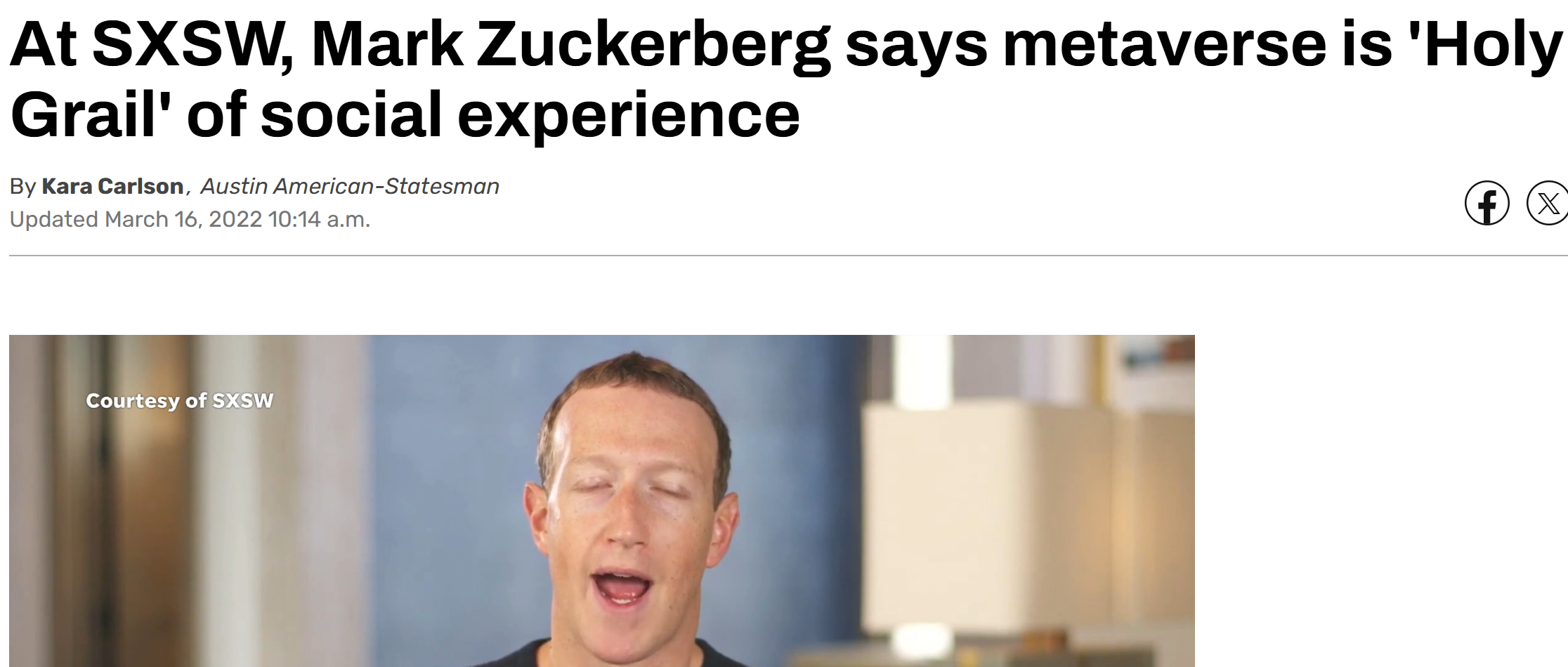
There was an entire doting economy that sprung up around pretending that the metaverse was a real thing and Mark Zuckerberg was single-handedly revolutionizing the way we work and play.
You were to ignore that VR can make half of your target audience barf, most humans simply don't want sweaty plastic strapped to their face, much of the tech wasn't new, and that a company whose unethical expansion ambitions fueled global genocide probably shouldn't be a trusted gatekeeper for any of it anyway.
Even purportedly serious interviews of Musk around that period seemed to adopt his framing that he was doing something "audacious," and that this really was a pivotal and meaningful paradigm shift. Many of those folks have, unsurprisingly, moved on to treating industry AI promises with the same kid gloves.
Mark was so relentlessly high on his own farts, he thought it was a good idea to demand that his charismaless mug should be the centerpiece of most of the profoundly terrible metaverse marketing.
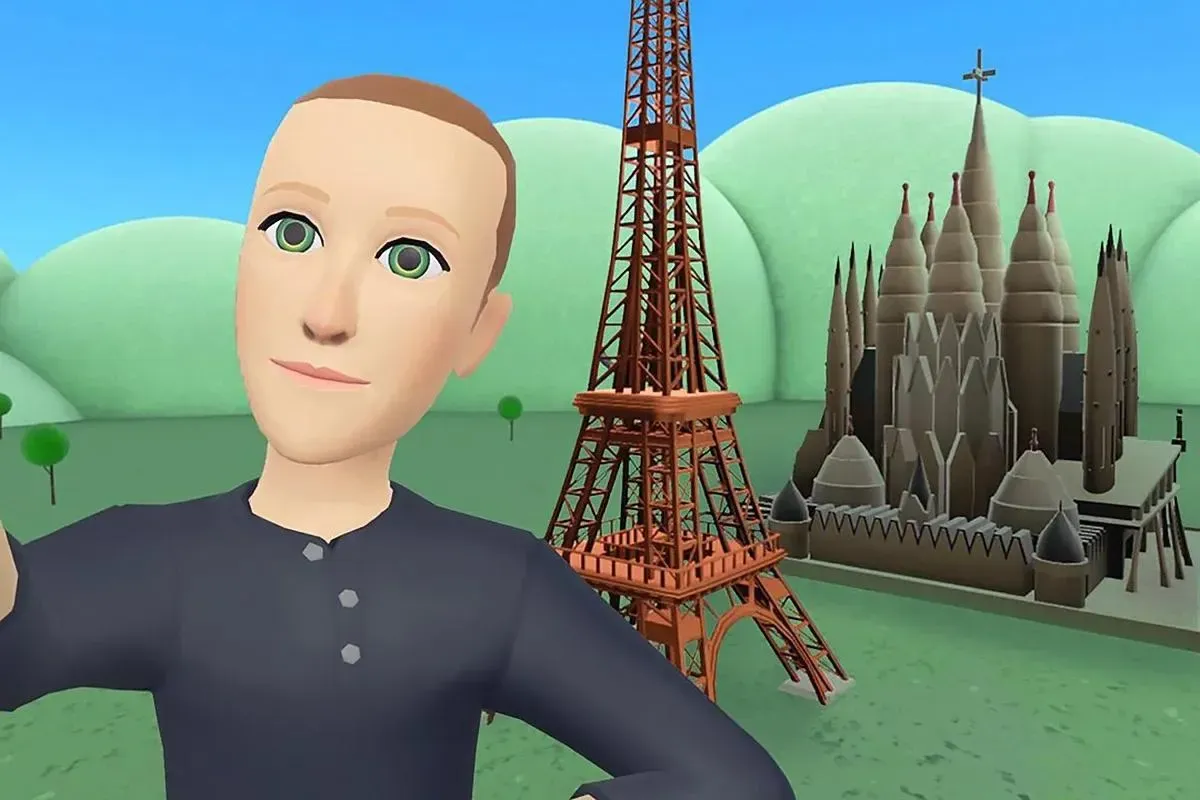
There was, of course, generalized revulsion to this at the time.
As it became obvious this was all very pointless and stupid by late 2024, many in tech media started retconning history, pretending that they'd seen this disaster coming from the start and most assuredly hadn't played a any role in portraying it as a serious venture (just like they did with mythologizing Elon Musk).
There's been absolutely zero lessons learned.
The tech press, as an ad-based extension of corporatism, has learned absolutely nothing from any of this. They're simply not financially incentivized to, and after years of brutal layoffs, all sixteen of America's remaining tech journalists are happy to say or do what they're told, provided they can still get health insurance.
So unsurprisingly, the"CEO said a thing!" treatment of Zuck continues apace in the AI era with nobody, anywhere, doing anything differently this time:
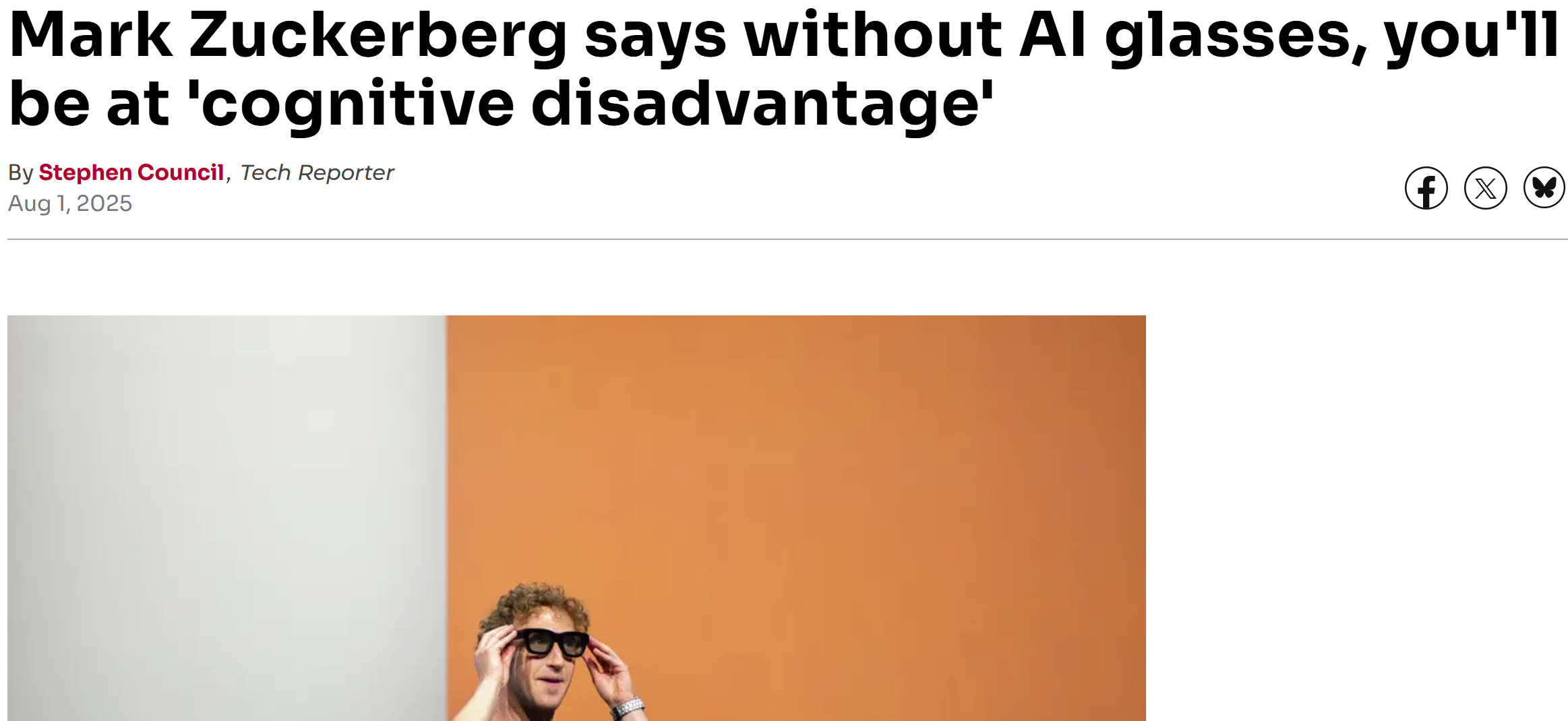
If you look at Meta's AI "innovations" they're not much to write home about either. Often it involves duct-taping some error-prone AI-synopses to the bottom of a Facebook story in a way that pretends to be useful. Or just hammering Instagram and Facebook audiences with the laziest automated slop imaginable.
A cornerstone of Meta's ambitions is its overlage AI sunglasses, which are increasingly being maligned in the market as a perv magnet due to the company's nonexistent privacy standards. Please notice how Mark still hasn't learned his lessons about featuring himself prominently in marketing.
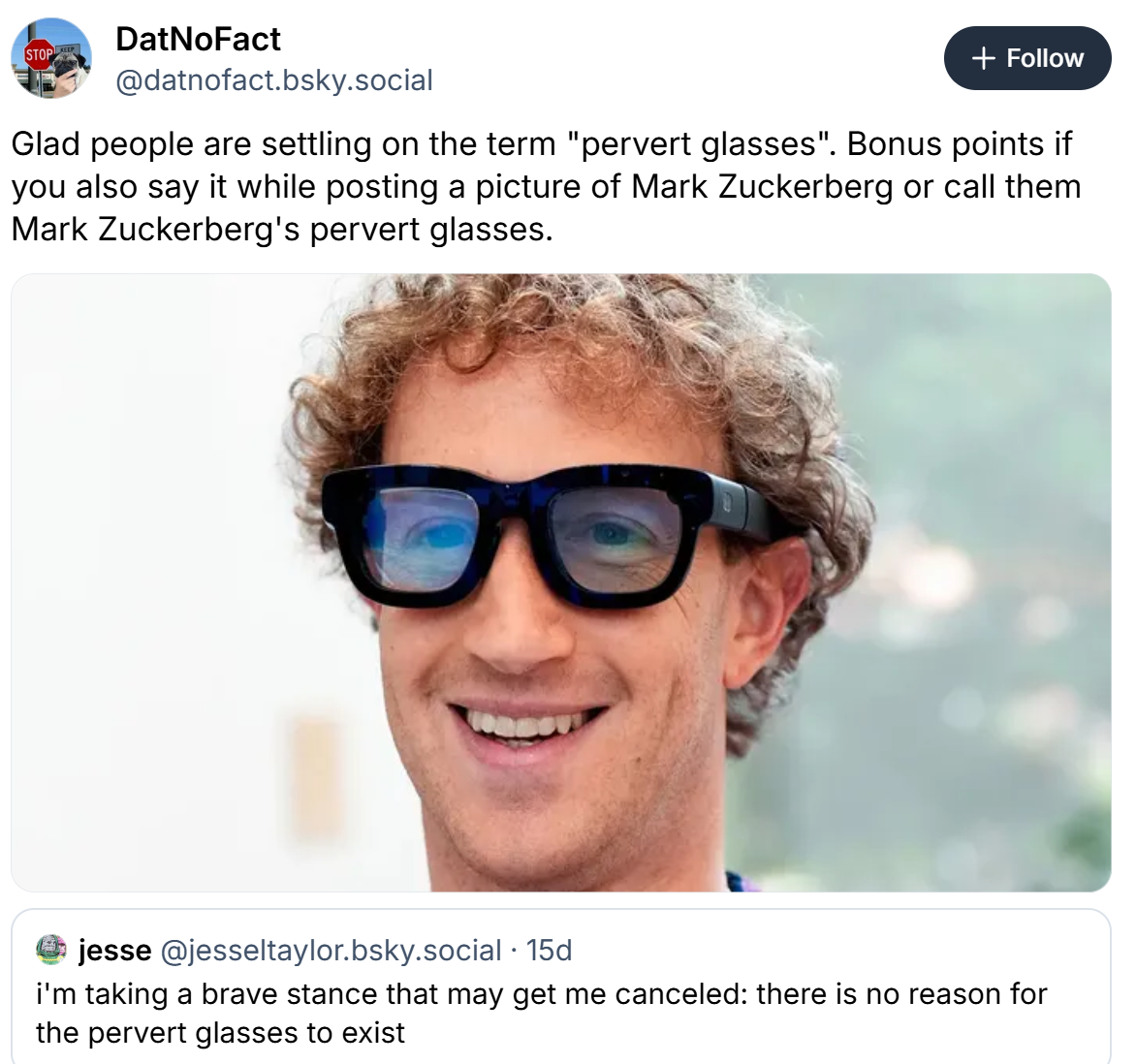
Of course it's never Mark that has to pay any sort of real world price for his incompetence. Instead it's the thousands of employees he's shitcanned, with many more rounds of layoffs to come, that foot the actual bill for his unremarkableness.
Mark, like much of the extraction class, is only allowed to fail upward, swaddled in the bold innovative mythologies constructed by the American access press and the numerous orbital sub-economies invested in the pretense.
Obviously Mark's job isn't being creative, interesting, or good. It's being deftly full of shit in just such a way as to convince Wall Street that the delusion of permanent quarterly growth at impossible-to-manage-scale is a real and useful thing, even if the underlying products being sold are cumbersome turds most people hate using.
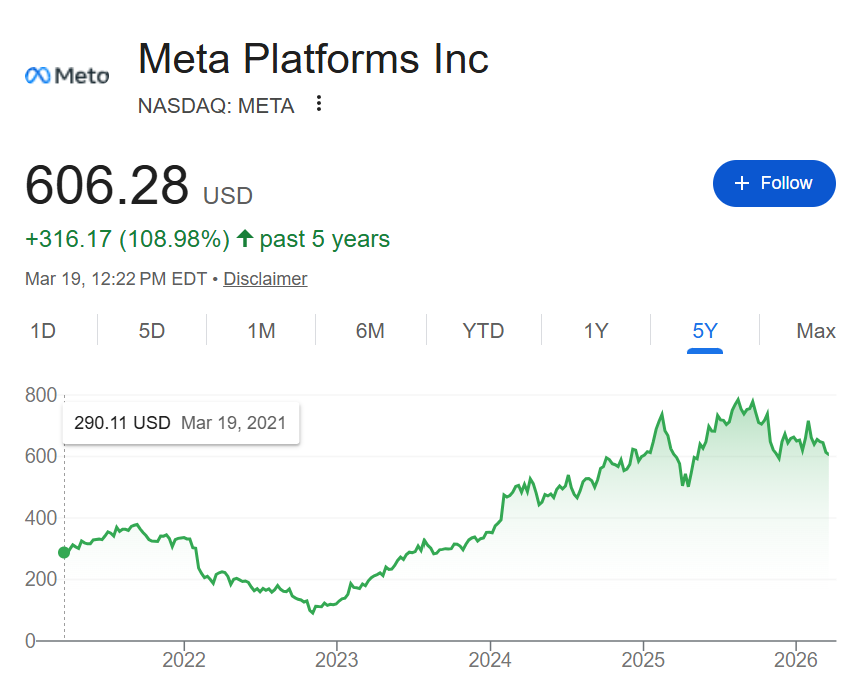
Because Zuck's only real skill is pursuing shallow ad engagement cack at immense scale with a total abandonment of any principles and ethics whatsoever, Wall Street has generally been excited to take the metaverse ride, which has now been seamlessly woven into the company's equally dull AI efforts.
The backlash to Zuck's bumbling predation resulted in the opposite of any sort of introspection. He instead decided he'd stop doing useful philanthropy on issues like housing and homelessness. At the time, he framed this as being "done with politics," something once again dutifully parroted by the press:
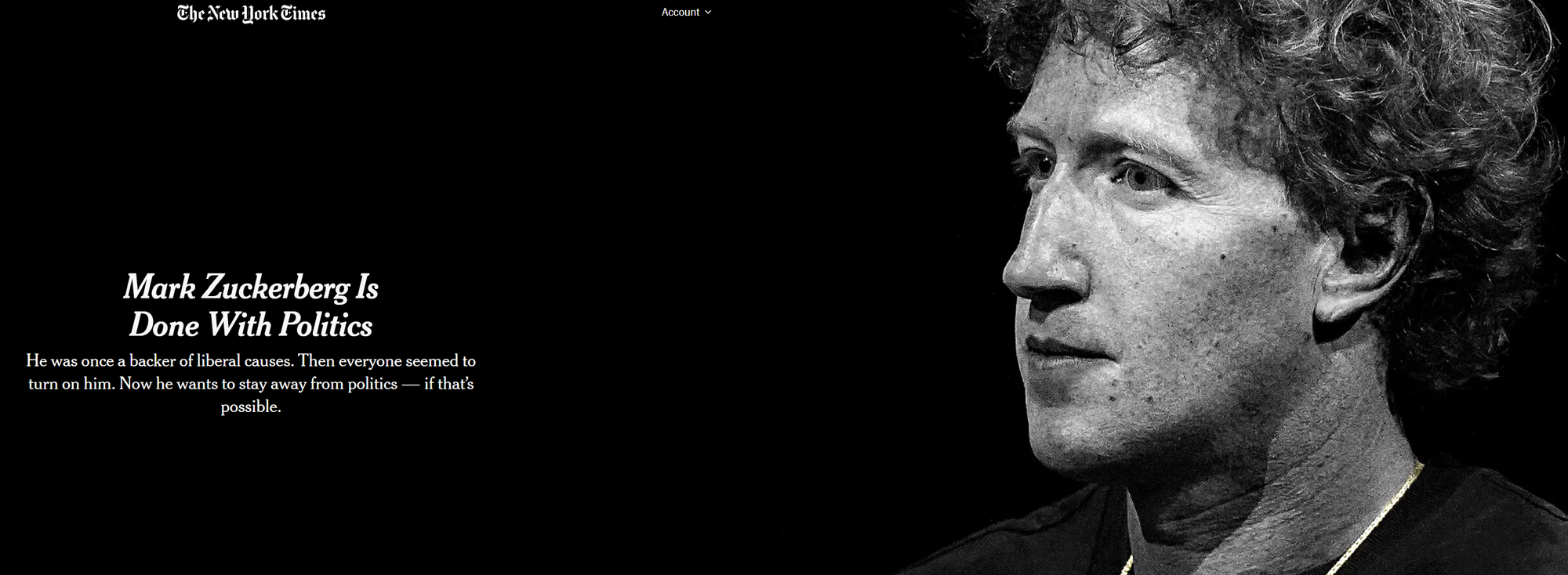
But Mark wasn't done with politics.
Instead he opportunistically began kissing the ass of the rising authoritarian movement, well aware that despite its hollow saber rattling about the "evils of big tech," Trump 2.0 would feature a total lobotomization of all remaining U.S. corporate oversight and regulatory independence.
Zuck's pivot included a midlife crisis rebrand, which involved getting an adult haircut, wearing oversized sweatshirts, and opportunistically pandering to the right wing MMA #hustlebro manfluencer clickbait engagement economy (as it turns out, they don't really like him either).
While it's an apples to oranges comparison, it's "fun" to sit and think about what $83 billion could have paid for in a serious country that hadn't been so thoroughly hollowed out by greed, corruption, and a mad obsession with artifice.
U.S. public media, recently destroyed by Zuckerberg's friends in the Trump administration, had previously been allocated just $1.1 billion for the 2026 and 2027 fiscal years. Zuck's friend Trump also cut $12 billion in education grants,
Some 25,000 scientists, as well as 7,800 research grants, were destroyed by the Trump administration's $32 billion cuts to the National Institutes of Health (NIH) and the National Science Foundation (NSF), two of the biggest public supporters of scientific research (read: actual innovation) in the United States.
So yeah, by "getting out of politics" Zuck meant supporting a devastating assault on foundational democracy, education, and foundational science, while putting on a silly show for our mad king about his next grand plan for pseudo-innovation.
Like Musk and Dorsey, Zuckerberg's perfectly representative of modern America: singularly obsessed with pointless growth, dedicated to the artifice of innovation, blinded by the sycophantic perils of impossible wealth, and utterly apathetic to all the creeping rot buried right beneath the surface.
Someday Facebook's unholy relevance will come to a terrible and ignominious end, and society, and the internet itself, will be exponentially better off.