The SpaceX IPO Is A Giant Unworkable Con Orchestrated By An Overt White Supremacist Huckster
Once again a broken U.S. press couldn't bother to convey the truth to the public when it comes to America's shittiest rich person.

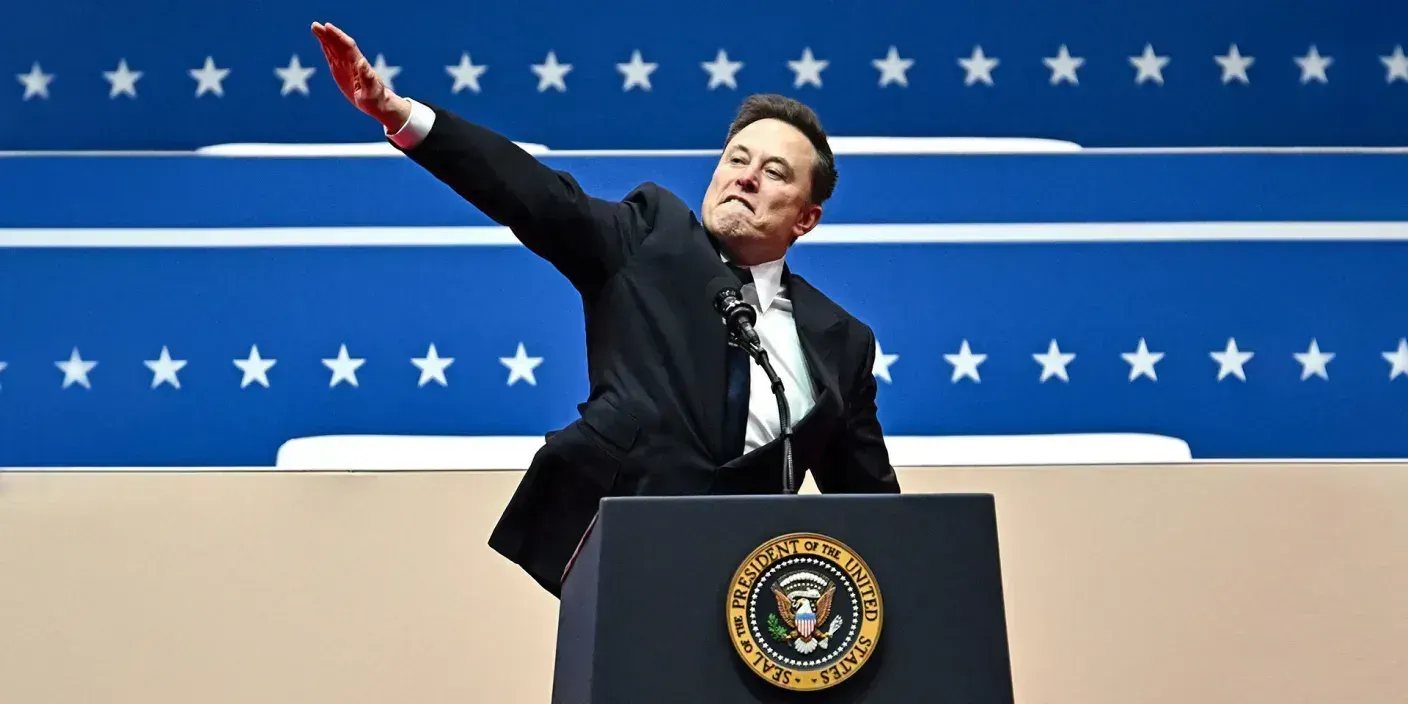
Elon Musk is a hateful white supremacist cosplaying as a supergenius engineer. There's little indication he actually understands how anything works, yet he's endlessly mythologized by a shitty corporate press, eager to ignore his virulent racism and financial fraud because he's accumulated obscene amounts of money.
Just last week he enabled violent race riots in Ireland. His clumsy Trump administration tourism resulted in the deaths of hundreds of thousands of people. He owns a far right wing propaganda website where he openly calls for violence against minority populations while enabling child sex abuse material.
Last week's SpaceX IPO is a stunning act of financial fraud that wouldn't be allowed in a country with functional regulators. It cobbles together a bunch of money-losing ventures into a giant pump-and-dump scheme untethered to objective reality, all controlled by a proven bullshitter.
But because the U.S. government is too corrupt to function in the public interest, and the U.S. corporate press lacks the integrity to tell the truth, this shake and bake scam is now tightly woven into Americans' retirement savings.
There's simply no shortage of red flags that this all ends very, very badly. Yet you'd glean absolutely none of this from reading this Reuters breakdown of the IPO, where this paragraph of fluff is as close to honesty Reuters gets:
While admirers view Musk's no-filter style as part of his appeal, critics have accused him of wielding oligarch-like power, raised concerns about governance at his companies and objected to his increasingly partisan political interventions.
"Oligarch-like" power. Ambiguous "partisan political interventions." A "no filter style." Unnamed critics with unspecified "concerns." Hard hitting stuff!
The IPO made Musk the world's first trillionaire (on paper), generated an immediate $75 billion in cash for Musk, and undeservingly made SpaceX the sixth-largest company in America worth nearly two-trillion dollars (on paper).
It also cemented the increasingly-unhinged Musk with an unimpeachable 80+ percent ownership control, ensuring that as Musk is steadily-devoured by his own madness and bad habits, the entire operation – and the broader economy – will remain tethered to his inevitable, albeit comfortably well funded, downward spiral.
The SpaceX prospectus filed with the government is a colossal work of fiction, promising a utopian future that will never arrive and technology that will never exist, delivered by a man incapable of delivering it. The proposal utterly fabricates paths to profitability, and lies endlessly about foundational reality.
SpaceX itself, it should be clear, lost $5 billion last year. And while Musk's actual engineers may have done some useful things for space innovation, the entire project is a financial dog; it's a heavily-subsidized money pit propped up by utterly unworkable plans for Mars colonization and a cumbersome Starship rocket that routinely explodes, often due to Musk's failure to understand engineering basics.
A big chunk of the prospectus promises that before SpaceX doesn't take us to Mars, it will get into the space data center business. That's also not going to be happening for a long list of reasons including radiation and maintenance and resupply costs.
But again, you wouldn't know that reading outlets like Semafor. They penned a sloppy piece of boosterism concluding that skepticism wasn't warranted because the CEO of a robot startup – unironically named Icarus (which hasn't deployed a single actual space robot yet) said so:
Another common argument is that it’s hard to switch chips and fix broken hardware up in space, but there’s a path to addressing that as well. New York startup Icarus Robotics is developing robots that can be controlled remotely to assist in space missions, and the bots are already slated to begin testing in the International Space Station next year. For that mission, they will unload bags with supplies like food and lab equipment, but the team can develop workflows for data center maintenance if the market demands it, CEO Ethan Barajas told Semafor last month.
I've always been fascinated by the way corporate business journalism isn't really journalism in any coherent sense of the word. As a telecom beat reporter I spent years watching major outlets write stories about U.S. internet access (or the lack thereof) where they couldn't admit the whole industry was dominated by corruption-coddled monopolies devoted to destroying all competition.
They weren't allowed to. Despite being factual, it was deemed editorially impolite.
This sort of journalism doesn't really care about real consumers, labor, technology, or even whether the technology even works. Its focus is propping up extraction class narratives surrounding unchecked wealth accumulation. It's lazy fanfiction for MBAs who want to pretend to be informed without the pesky weight of ethical or even logistical realities.
It would take any of these journalists half an hour to get an eager and objective academic or subject-matter expert on the phone to discuss what's actually happening. But they're hired and conditioned by rich, white, predominately male media ownership to avoid upsetting wealth and power.
The ivy league trust funders in charge of major media have all so deeply normalized this behavior, they often don't even see that they're doing it. Many genuinely think they're doing a good job.
For example: if you take a quick read of this New York Times breakdown of the SpaceX IPO from last week, you'll find they can't be bothered to mention that Musk is a proud white supremacist with a history of lying about literally everything, from project timelines to the most basic way technology functions.
It takes Times authors Ryan Mac and Lauren Hirsch until the eighteenth paragraph to even vaguely suggest that anything whatsoever might be slightly amiss, but those concerns are quickly dismissed in favor for a two-paragraph scoop related to the company's decor and late-night party plans:
At Goldman Sachs on Friday, the bank remade the lobby and cafeteria of its Manhattan offices with a space theme, replete with macaroons that looked like moon rocks and a mission control brunch with “big bang burritos.” Not to be outdone, JPMorgan and SpaceX commissioned the artist Leo Villareal to create a celestial light show atop the bank’s headquarters.
SpaceX’s celebration at Starbase was expected to continue into the night. Executives were set to address employees during a party, with least one bar on nearby South Padre Island reserved for festivities, according to a person familiar with the plans.
They're lemmings gleefully headed for a cliff in pursuit of a high.
The majority of the IPO's value is comically propped up by Musk's xAI and his fifth-place "AI" chatbot; found earlier this year to be making child sexual abuse material because Musk Corp wanted to goose audience engagement.
xAI lost $6.4 billion last year, is unlikely to ever make an actual profit, and while you could argue the underlying infrastructure investments have value, that's unlikely to be the case once the AI bubble pops and everybody's stuck with half-finished data centers and warehouses full of last-generation graphics cards.
The only actual profitable company included in the IPO is Starlink, Musk's low-Earth orbit (LEO) satellite broadband company.
But here too Musk is preposterously full of shit. Starlink is profitable at the moment, but endlessly replacing thousands of LEO satellites involves massive costs that are only going to accelerate. SpaceX projects laser-fast growth from 10 million to 300+ million subscribers, something that's simply not happening.
Starlink is a great option for rich assholes with boats or people in rural areas that can afford it. But it's a niche solution. It's too congested to meaningfully scale. It's generally too expensive for most disconnected Americans. The average revenue per user (ARPU) is already dropping, and to expand at predicted scale it would have to face down emerging competitors by lowering prices, eroding profitability.
The Rogan intellectual omniverse genuinely views Starlink as a form of magic pixie dust. They desperately want to believe it's a miracle technology that solves the entirety of all connectivity issues (this terrible Bulwark interview with Jason Calacanis does a nice job showcasing the full scope of the delusion).
In doesn't. In fact, I'm currently working on a piece for The Verge (should be out next week) exploring how Trump hijacked billions in infrastructure broadband grants to throw at Jeff Bezos and Musk for congested, slower satellite broadband service they already planned to deploy.
Regardless, you'll be thrilled to note that this giant pump-and-dump scheme has been bone-grafted to the broader economy and many Americans' retirement accounts. And as usual, it was left to a handful of under-funded independent media outlets to try and explain this to people amidst the din of boosterism.
To accommodate the offering, Nasdaq changed its rules so that massive IPOs like SpaceX could be swiftly included in the Nasdaq 100 index within 15 days instead of the much longer "seasoning" period used to protect the market and public from fraudulent valuations. But Musk is a supergenius engineer. Rules don't apply.
What could possibly go wrong.
I don't mean to malign the entire U.S. press for its SpaceX IPO coverage. The Verge had the courage to publish a story openly (and correctly) calling Musk a killer. Smaller independent outlets generally did all of the heavy lifting when it comes to, you know, telling people the truth. The whole purpose of journalism.
But pretty broadly the U.S. establishment press continues to fail us at every key metric – and at every pivotal moment – that actually matters.
We desperately have to untether U.S. media from corporate power and brunchlordism, and rebuild it into a public service institution managed by actual journalists. Maybe we can get to work on that project on the other side of avoidable economic collapse, enabled and normalized up by our sad and soggy press.