The New York Times Is Simply Not A Credible Newspaper
The paper fired a columnist for the "crime" of simply reposting valid criticism of the paper's refusal to cover a new and credible Trump rape accusation.

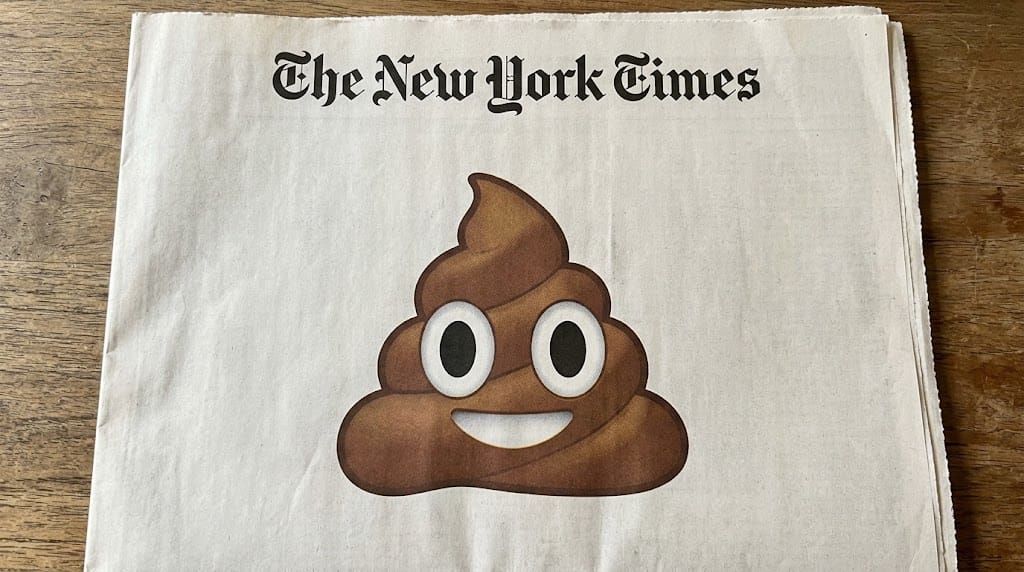
I've mentioned once or twice that I think the U.S. journalism industry has been completely hollowed out by consolidated corporate power, resulting in a bunch of bloodless trust fund brunchlords who cosplay as journalists but routinely pull their punches when it comes to truly challenging the extraction class.
It's not subtle. The U.S. establishment press has failed, repeatedly, to accurately describe to the public how fascists – with the enthusiastic support of our most prominent industries – hijacked the government and did profound generational damage to everything from civil rights to public safety.
From ponying up bribes to the President, to "sanewashing" his corruption and madness; the U.S. press' lack of courage and "both sides" pseudo-objective framing has been endlessly and successfully exploited by authoritarian zealots.
No institution has symbolized this more in the last few years than the New York Times, whose coverage is routinely criticized for soft selling the scope of our modern authoritarian horrors (I recommend this recent video, where a Times editor feebly tries to address excellent editorial criticism by Mark Jacob, former metro editor for the Chicago Tribune).
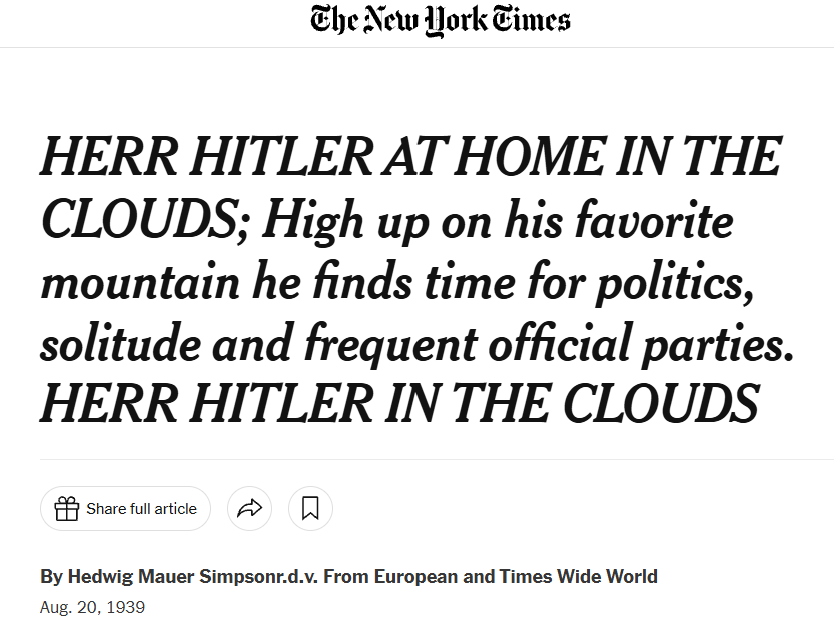
The Times' feckless capitulation to (and normalization of) authoritarianism is a longstanding feature, not a bug.
There's multiple, overlapping causes for it.
Corporate consolidation and oligarch control of government and media has resulted in the (quite intentional) decimation of real truth to power journalism. Killing publicly-owned media and letting ad engagement (if people click on it, it must be good!) dictate the width and breadth of news has proven positively fatal.
What's left is a tightly woven network of enshittified outlets, historically owned by rich white old men, which produce something that kind of looks like useful journalism, but generally exists in service to industry and wealth (see the endless array of "CEO said a thing!" reporting that lazily parrots executive claims).
These outlets are stocked with aspiring young brunchlords and assorted fail-upward nepobabies whose ongoing condition of employment requires a collective denial that there's anything wrong. It's been so deeply conditioned, over so many decades, that most of these folks genuinely can't even see the problem, and get unreasonably defensive if anybody points it out.
That's not to say these outlets can't or don't occasionally still do quality reporting; but the broader tendency for these outlets to coddle Republican and corporate interests, normalize Trump's insanity, softsell horrible wars, and endlessly demonize good faith progressive reform is kind of hard to fucking miss.
The Times found itself in the crossfire again this week, after it (and numerous other major outlets) simply decided not to report on major and credible new accusations of rape against the President of the United States.
On October 26, the Democratic members of the House Judiciary Committee released a report containing a new allegation of rape against President Trump by Beatrice Keul, a Swiss model who met Trump when she was a contestant in the Donald J. Trump American Dream Pageant in 1993:
According to Keul, during the pageant, “Donald Trump’s representative invited Keul to go upstairs at the Plaza Hotel to meet with Trump.” After she was ushered into the New York hotel suite, Keul said Trump grabbed her from behind “and forcibly raped her… tearing her dress and causing bleeding and bruising on multiple parts of her body.”
The evidence is overwhelming at this point that Trump Donald was an active participant in Jeffrey Epstein’s sexual abuse of young women during the mid-to-late 1990s. Yet major outlets like the New York Times and Jeff Bezos-owned Washington Post didn't write a single word about the new allegations.
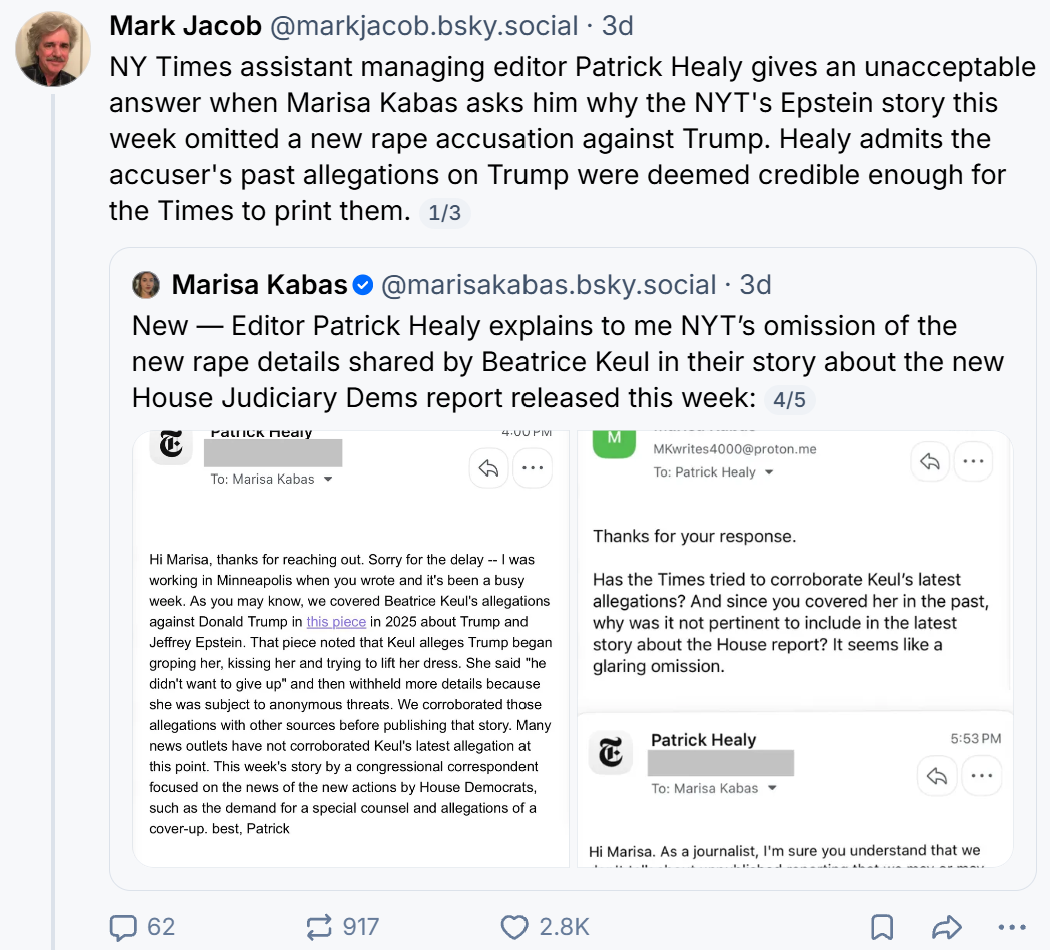
Independent journalist Marisa Kabas tried to get the Times to explain the journalistic failure. The Times' excuse was that it couldn't independent corroborate the rape accusation (this doesn't explain why the paper decided to not mention the credible rape allegation at all in their coverage of the Dem report).
Things then got...exponentially more problematic.
Jacob (whose Stop the Presses newsletter is worth a follow) wrote a post on Bluesky criticizing the Times' response:
This post was simply shared on Bluesky by New York Times romance fiction columnist Olivia Waite:
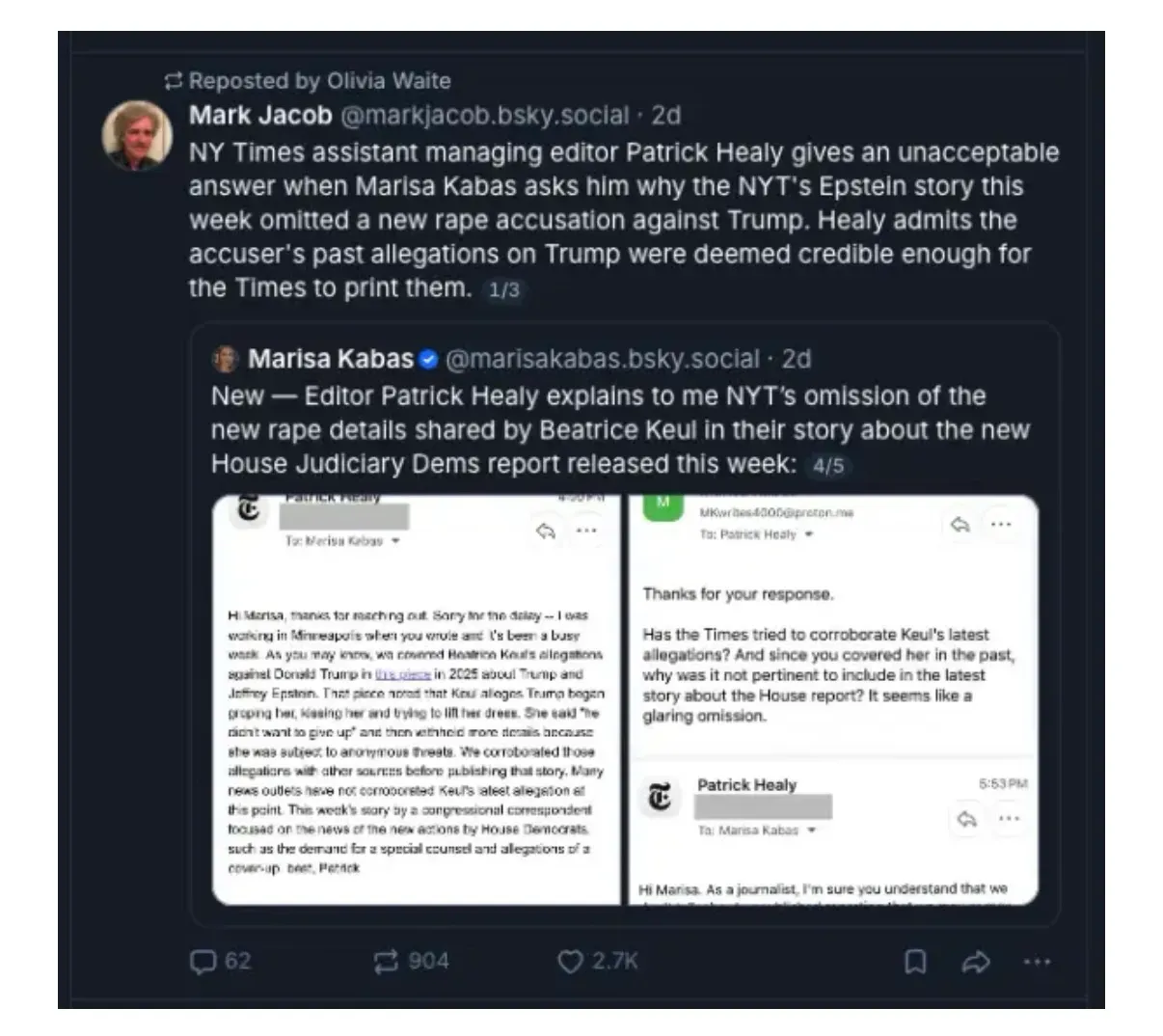
The Times response? To terminate Waite's contract with the paper for simply sharing a social media post:
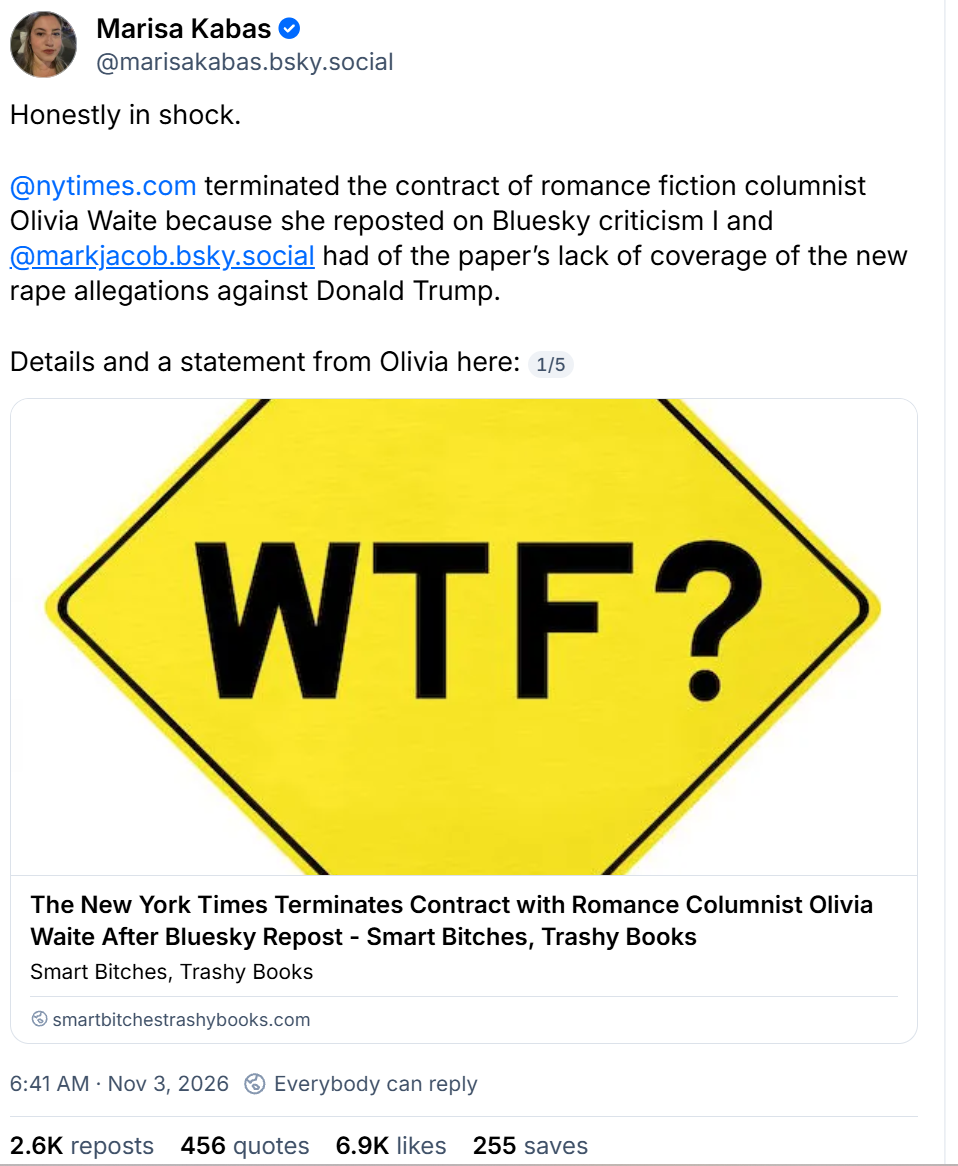
This has long been an issue at major outlets like the New York Times and Washington Post. They have long-standing, archaic, and silly rules that their writers are not supposed to share honest human opinions or thoughts on social media, lest this "reflect poorly" on the papers' purported credibility and objectivity.
In 2021, the New York Times fired digital editor and freelance journalist Lauren Wolfe for the sin of claiming on social media she had "chills" watching President Biden's inauguration motorcade arrive at Joint Base Andrews. Wolfe's inane comment was weaponized as an example of "left wing bias" by right wingers.
In 2022, Hosam Salem, a freelance Palestinian photojournalist for the Times, stated he was fired from the Times for social media posts that “expressed support for the Palestinian resistance against the Israeli occupation.”
In 2023, award winning columnists Jazmine Hughes and Jamie Lauren Keiles were forced to quit New York Times Magazine for simply signing an open letter condemning Israel’s ongoing genocide in Gaza.
That same year, executive editor Joe Kahn issued stern warnings to the paper's staff after dozens of Times contributors and staffers signed open letters criticizing the paper's archaic and problematic framing of transgender healthcare.
You might notice a consistent theme. You'll also notice how the warnings and terminations usually only head one direction: against progressives. You'll also notice how often the Times aligns itself with bad faith right wing campaigns to harass journalists, and portray ordinary human expression as somehow an indication of broad and unreliable left wing bias across the U.S. media.
While the U.S. corporate press certainly has a bias, it's generally a center-right, pro-corporate capitalist one. For example you'd never see the Times fire a journalist for being mindlessly bullish about Elon Musk's latest lies, or overly-enthusiastic about the latest right wing racist pseudo-science agitprop.
The real function of the Times erratic enforcement is to mute legitimate (and almost unilaterally progressive) criticism of the paper by their own staffers', and to allow narrow-brained editors to define the acceptable contours of publicly-viewable debate. It's an ignorant relic, and it also illustrates the way these papers are willfully oblivious to their own class, nationalism, and capitalist biases.
As in, editors will claim a journalist openly supporting female reproductive care on social media reflects poorly on the paper's objectivity. They'll then turn around and parrot whatever insane thing Sam Altman said this week, or give bizarre, unearned platform credibility to a nazi extremist without missing a beat.
We saw the culmination of this ideology a few years ago when the Associated Press fired a young promising journalist named Emily Wilder for the offense of engaging in pro-Palestinian protests in college and rather vaguely supporting the Palestinian people on Twitter.
Firing a romance fiction columnist for simply sharing a single social media post is a particularly pointed and insane example of this sort of weird pseudo-objective pretense the editors at these outlets engage in. Wilde's real offense: validating legitimate, good faith criticism of the paper's indefensible editorial choices.
Wilde offered up a comment on the fracas:
On the eve of a national midterm election, the Times reached all the way over to the Book Review and parted ways with a writer in the genre that most often presents rape scenes from the perspective of the victim, in stories that insistently end with the victim triumphant, beloved, and happy.
And it appears that the paper’s ideal of journalistic objectivity and nonpartisan stance consists of not naming rape allegations as such when they apply to a sitting president, on the eve of a national midterm election.
The email demurs that they would never ask me to censor myself on social media — but it’s hard not to view being let go so abruptly as retaliation for one of the most minor modern forms of speaking out.
The Times has repeatedly been criticized for these archaic restrictions and their lopsided enforcement. They routinely just double down on the pretense that they're "protecting the paper's credibility" by preventing employees from engaging in ordinary human (humanist, progressive) social media expression in the age of violent authoritarianism.
This might be a more cogent sales pitch if the enforcement was ideologically consistent. Or if there hadn't also been endless, excellent criticism of the way the Times sanewashes Trump, uses "weasel words" to normalize corruption and authoritarian madness, embraces "view from nowhere" framing to give unearned credibility to fascists, and endlessly sanitizes Trump's assault on civil rights.
You'll notice this same disease over at the Washington Post and New York Times, opinion sections, where thoughtful, challenging, and original thinking now routinely takes a backseat to a weird sort of center-right contrarian trolling, designed to grab endless hate-clicks and coddle establishment norms.
Like so many major U.S. media outlets, these papers do this because this is the sort of thing rich, white, male ownership likes. Many of these owners genuinely view progressive reform, civil rights, equitable taxation, and competent corporate regulation as bigger threats to their well-being than outright fascism.
They hire people that cement this worldview. They fire people who challenge it. They then dress up their scatological incoherence as a dutiful dedication to objectivity and fairness, ignoring their complicity in what have been historic attacks on female reproductive health care and foundational civil rights.
I'll say it again and again for those in the back: give your money to reliable journalists and institutions that have actually earned your trust during America's descent into authoritarian ignorance, propaganda, and madness. We're desperately going to need them in the decades to come.