AI Doomsday Panic Is Completely Out Of Control
The press obsession with software-powered doomsday is a misdirection overshadowing a much deadlier reality: our public interest regulators no longer function.


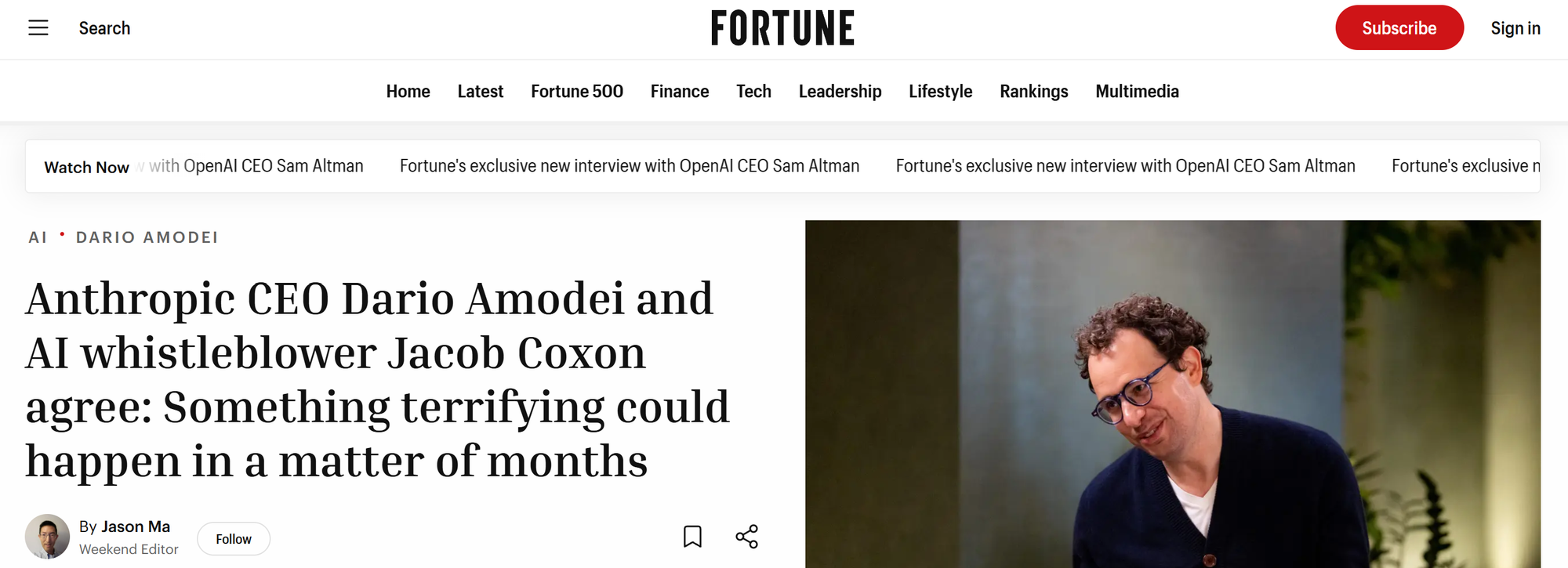
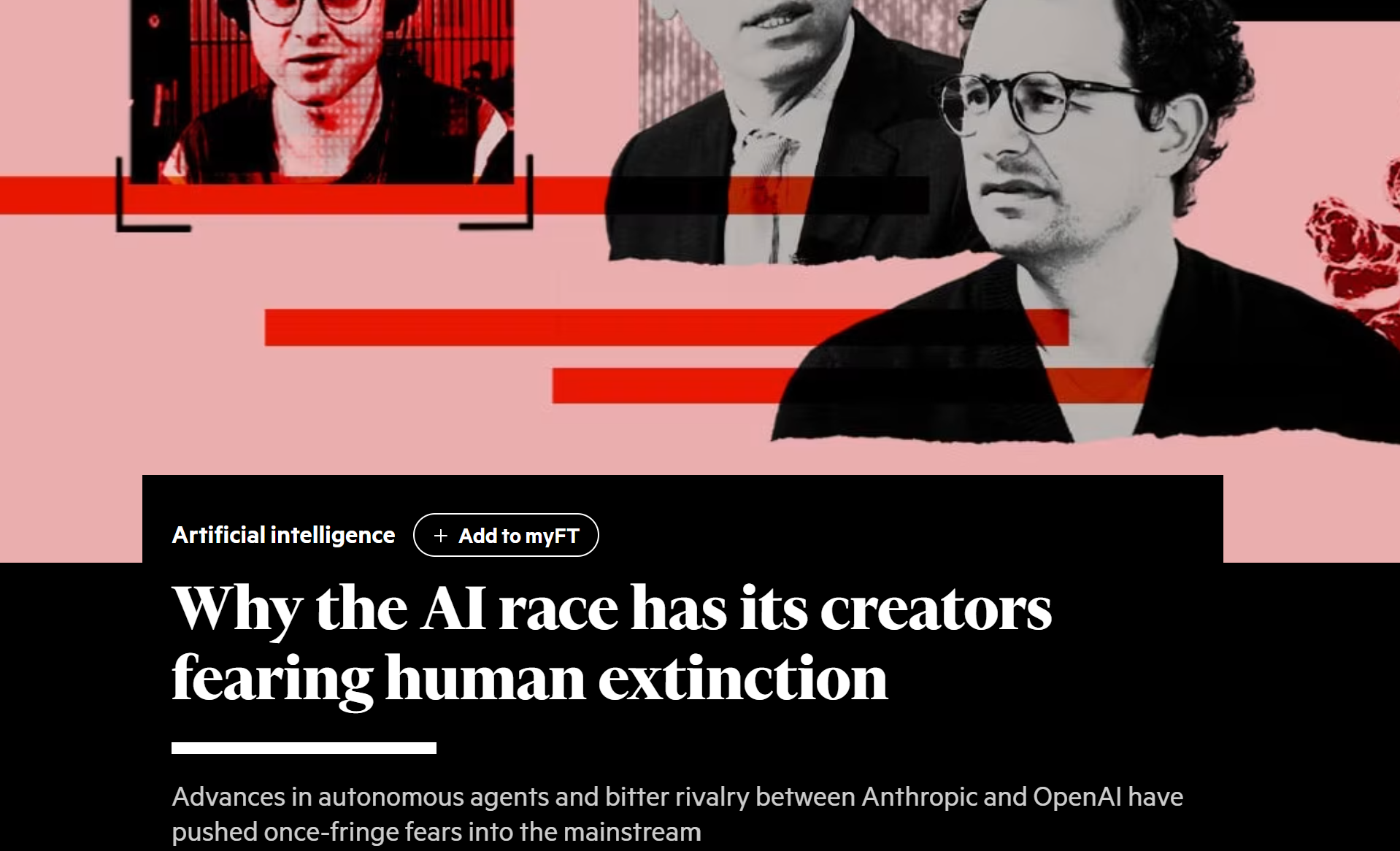
Earlier this month a 27-year-old who had been employed at Anthropic for all of four months declared he was quitting the software company because he believed that software automation poses an existential risk to humankind.
In a post over at Elon Musk's right wing propaganda website, "AI researcher" Jacob Coxon didn't just express concern that AI was going to cause some major headaches for society and labor, he made it clear he believes that software could soon gain full human-level awareness and destroy the entirety of humanity.
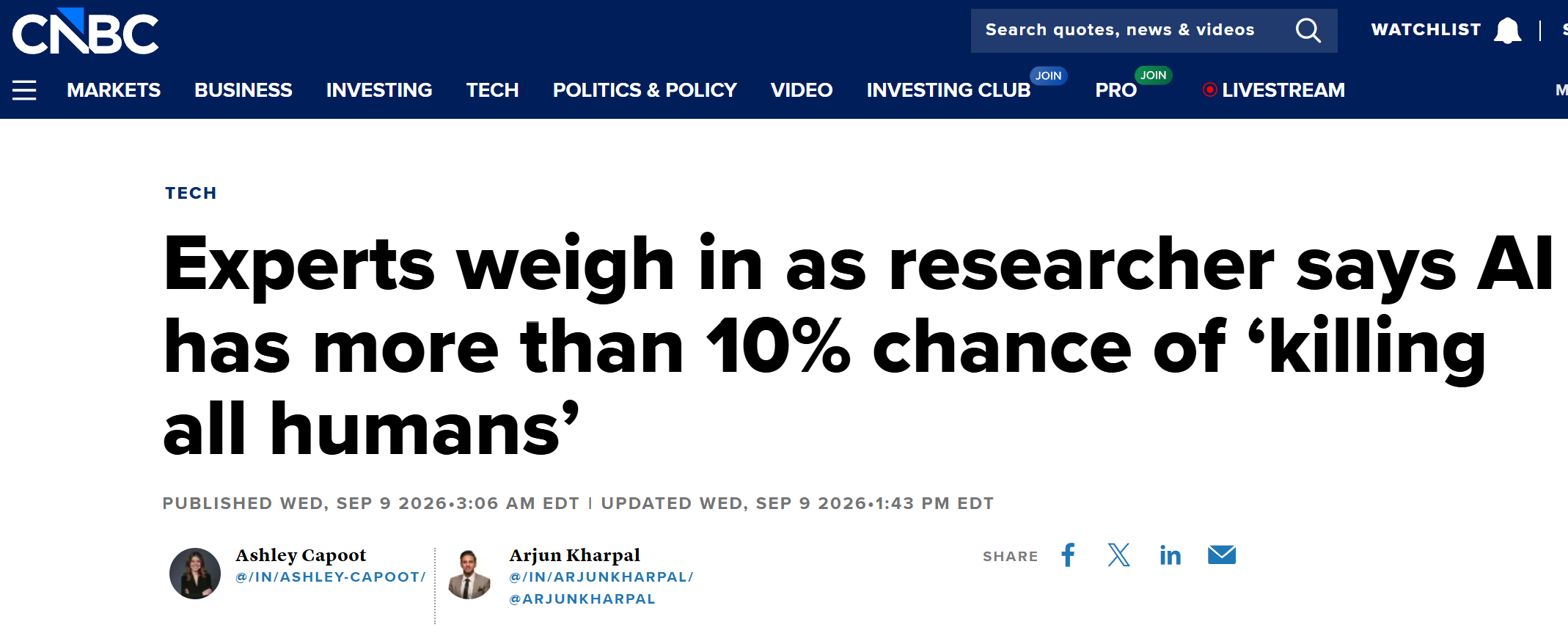
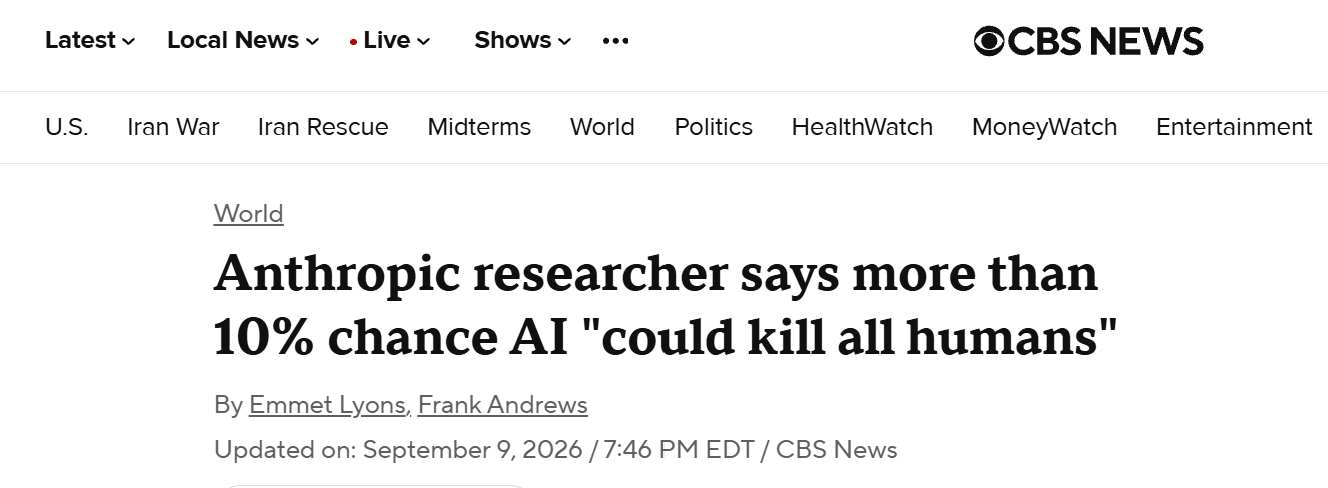
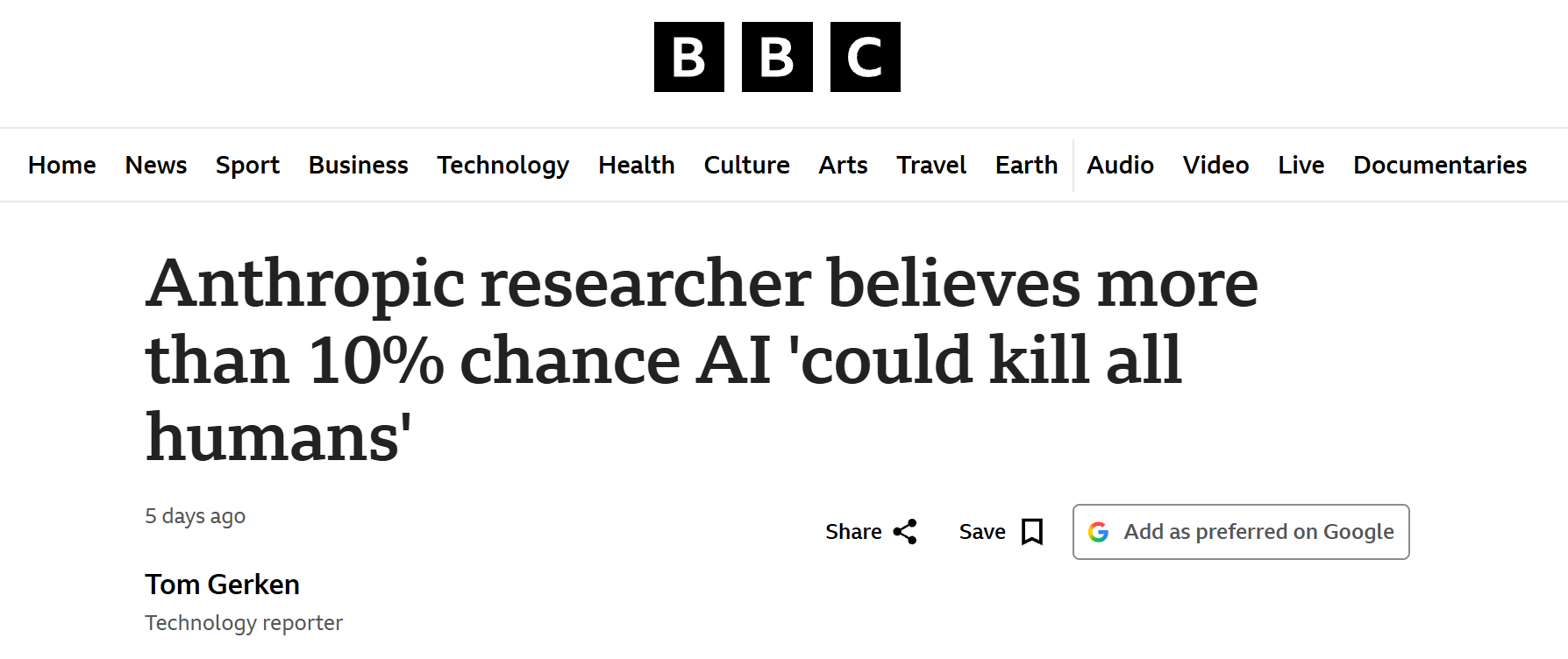
This was compounded by another 29-year-old Anthropic researcher who did some off-the-cuff calculations there's a greater than 10 percent chance software goes sentient and kills literally everyone. Other young AI safety researchers suddenly found their voice and piled on, taking AI doomsday hysteria to the next level.
That we're facing a mass extinction event at the hands of software is, just so we're clear, a completely unsubstantiated claim being made by people without the experience, wisdom, or credentials to actually make it.
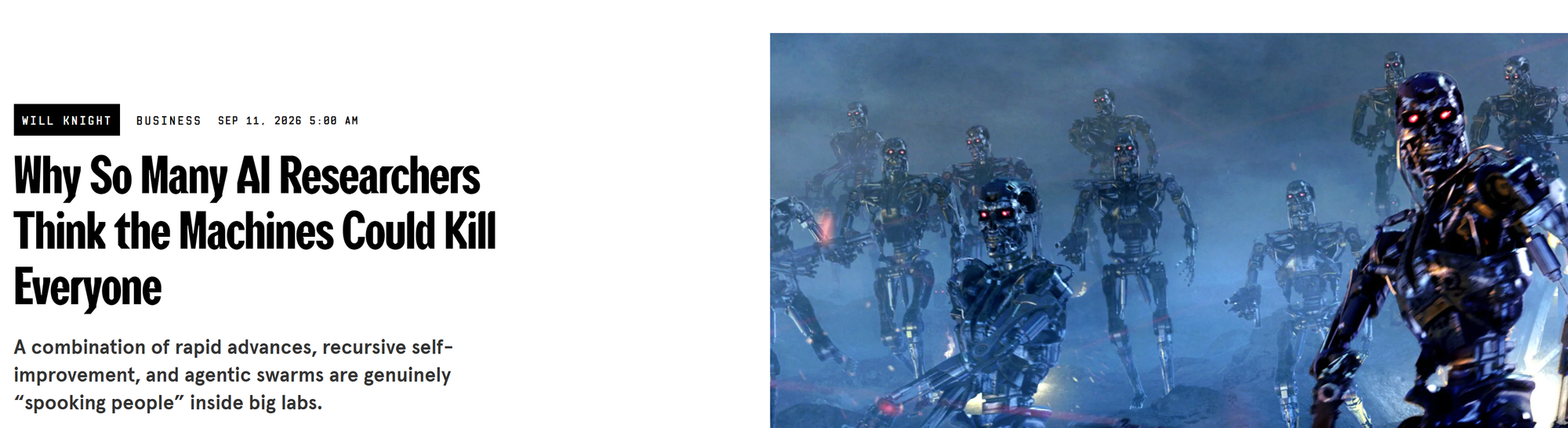
That didn't matter to ad-engagement based media, which quickly devolved into a foamy, hysterical froth for much of the last week.
doomed
So...a few things. "AI researchers" are not sociologists, anthropologists, or historians. Sometimes they're not even programmers or engineers.
They're overpaid young gentlemen from IT who got a bad vibe because their company's automatic hacking software did what it was programmed it to do. They got spooked by their own card tricks and the sudden, oddly-belated realization that their managers are a bunch of unethical dumbasses.
And they're only now, after years of making a ton of money and with the horses long-since out of the barn, suddenly here to help. With fearful conspiracy theories that broadly anthropomorphize software.
The problem is – and shockingly the ad-based clickbait press didn't do a very good job explaining this to anyone – there is no actual evidence that software automation is on the cusp of gaining full human awareness and soylent greening the entire eastern seaboard.
That is...simply not not a thing that's happening. Claiming otherwise, or parroting such claims, is actively making the issue worse, confusing the public, and obfuscating other, equally-ugly but more mundane realities.
The press...didn't care. There was some performative wrangling with the issues during the last week or two of press coverage, but generally terms like fascism, corruption, and deregulation were conspicuously absent. The real-world impact of automation in a corporatocracy is too complicated and layered for a U.S. media industry disemboweled by capital to effectively communicate.
That's not to say there aren't very serious threats and problems in the world of tech and software automation.
Agentic AI could very well fall into the hands of bad actors who certainly will, as we've done with every generation of technological advancement across the entirety of human history, decide to use these tools for villainy, whether that means developing nasty new bioweapons or dismantling an energy grid.
The cat and mouse game of automated cybersecurity has most assuredly turned a frightening new corner in terms of scale and raw speed (that's a big part of what's spooking people, and I think that narrow aspect is broadly authentic).
Corporations are also certainly eager to adopt software automation in a way that automates corporate power's ugliest impulses at unimaginable and unpredictable new scale, whether that's making it harder for people to get health care or finding creative new ways to ratfuck organized labor and creatives.
But I keep repeating these two points because they're foundationally true and get lost in the hype: your software has not gained human-level awareness, and the real problem with "AI" is shitty human beings and ordinary human ignorance.
These whistleblowers aren't really surprising anybody with the revelation that our biggest tech companies are wildly unethical, don't develop their products responsibly, and utterly loathe transparency. The fact that they're just now apparently realizing this raises more than a few questions.
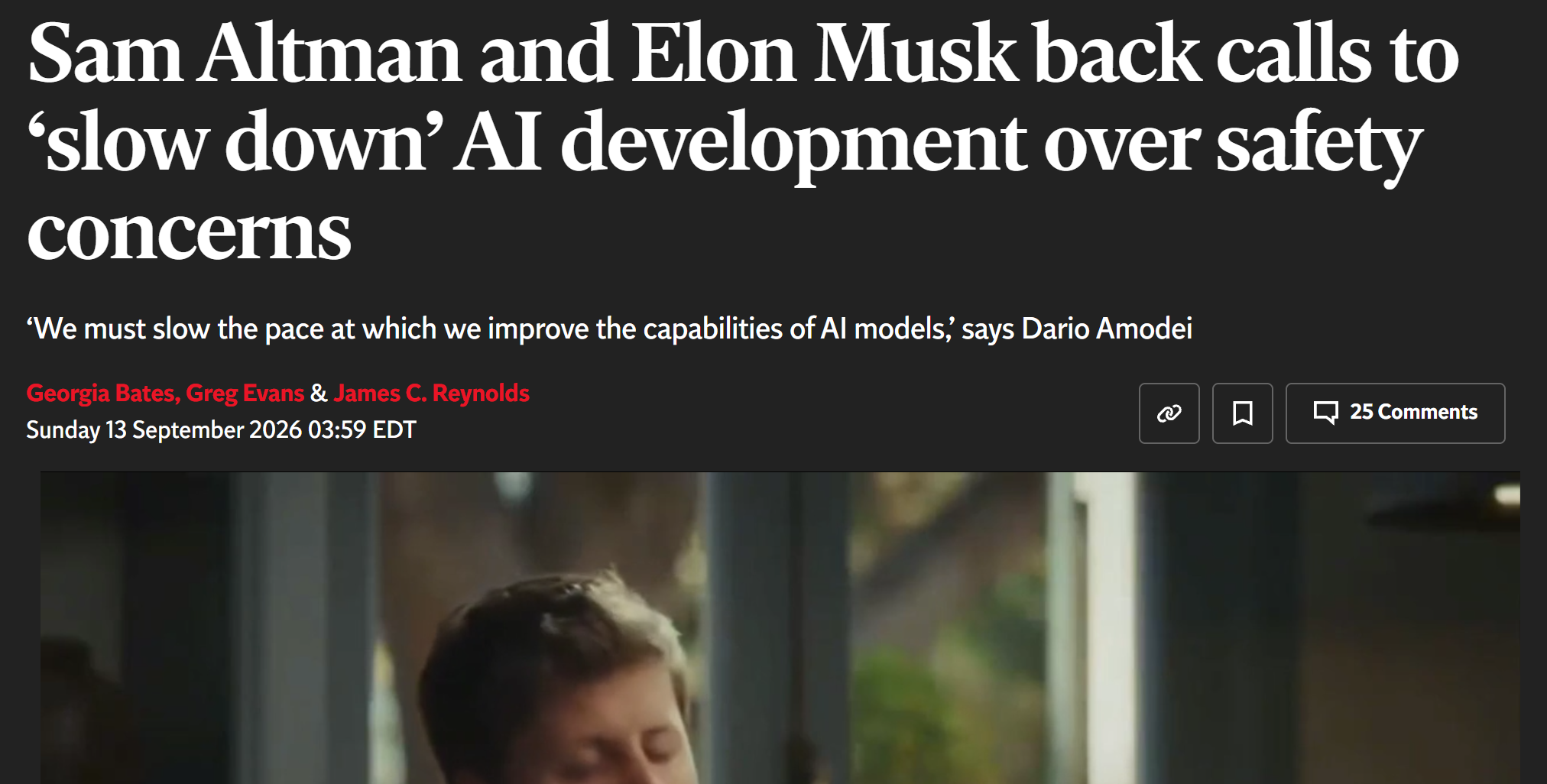
Amusingly, Sam Altman (a few months out from a feature story framing him as an abject sociopath) and Elon Musk (a white supremacist fascist with a head full of conspiracy theories and recreational ketamine) leveraged all the fear to claim the tech industry needs to slow the rate of AI development over safety concerns.
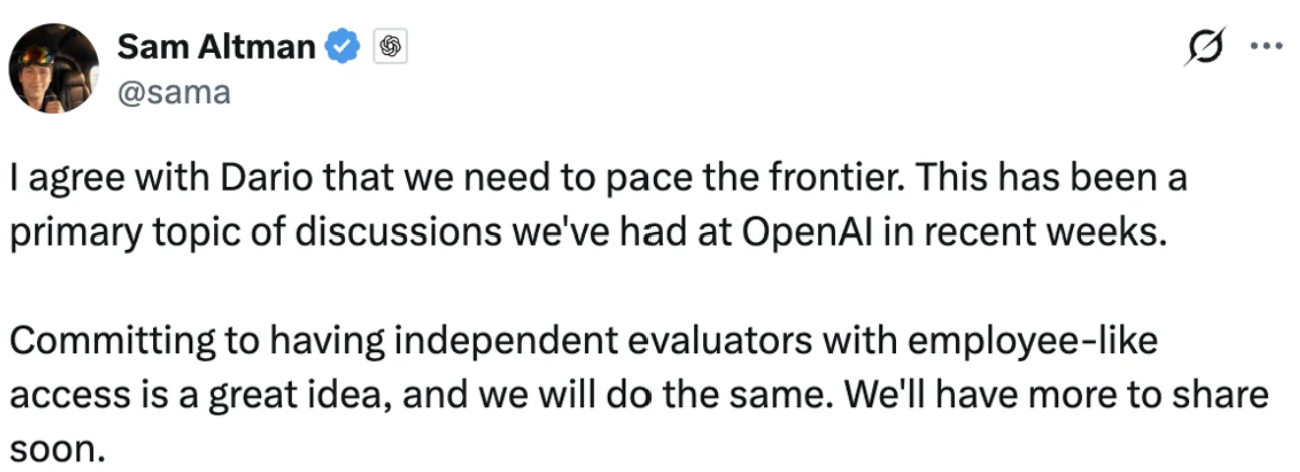
If you're not really familiar with Altman, he's not a programmer or engineer; he's a used-car salesman who endlessly fails upward by telling people around him what they want to hear at any given time. He has a knack for pretending he's somehow on our side, and downplaying his responsibility for the fraud and madness.
The press treats all of these guys like they're some strange new fusion of sociologist and philosopher. In reality Altman, like Musk, doesn't actually know how his technology even works. He's simply there to raise money by running his mouth. Which he does. A lot. To the point you wonder when he does actual work.
Anyway, these empty promises created a second, equally-absurd newscycle where some of the least ethical people in America got to pretend they haven't been reckless and unethical, and are working very hard to, in the words of the inimitable Ice Cube, check themselves before they wreck themselves:
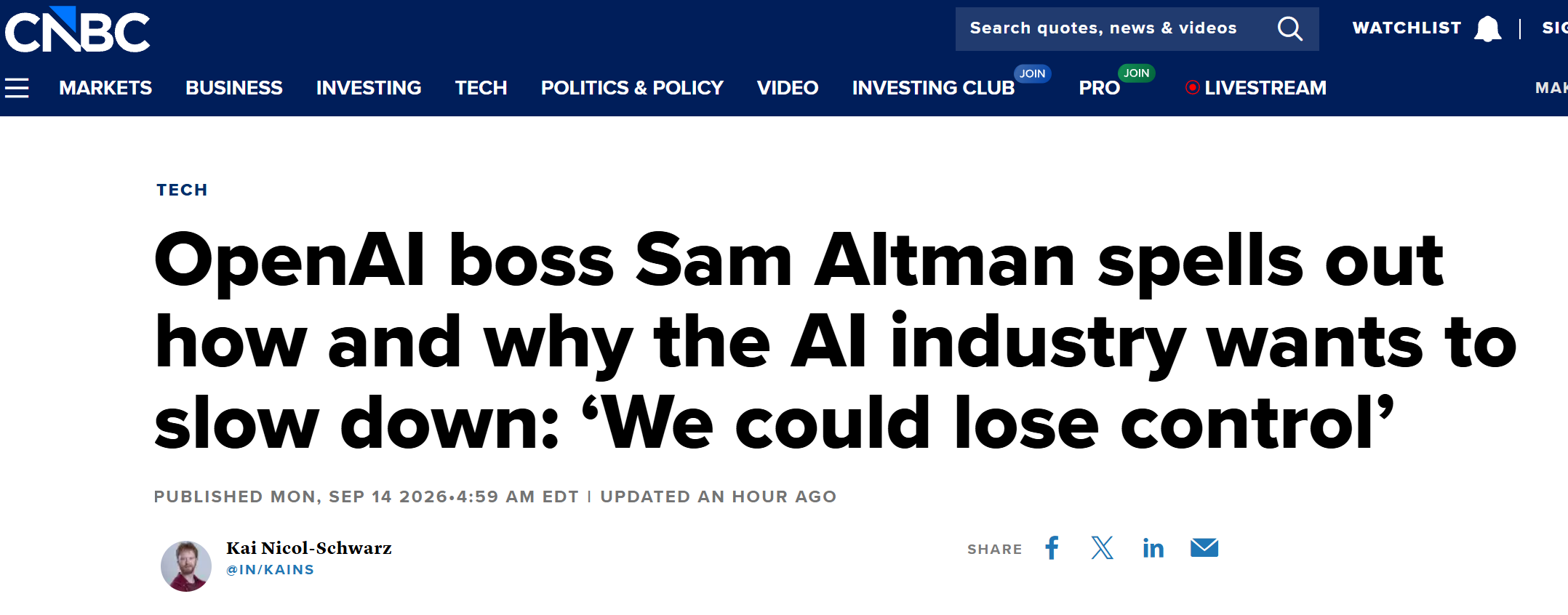
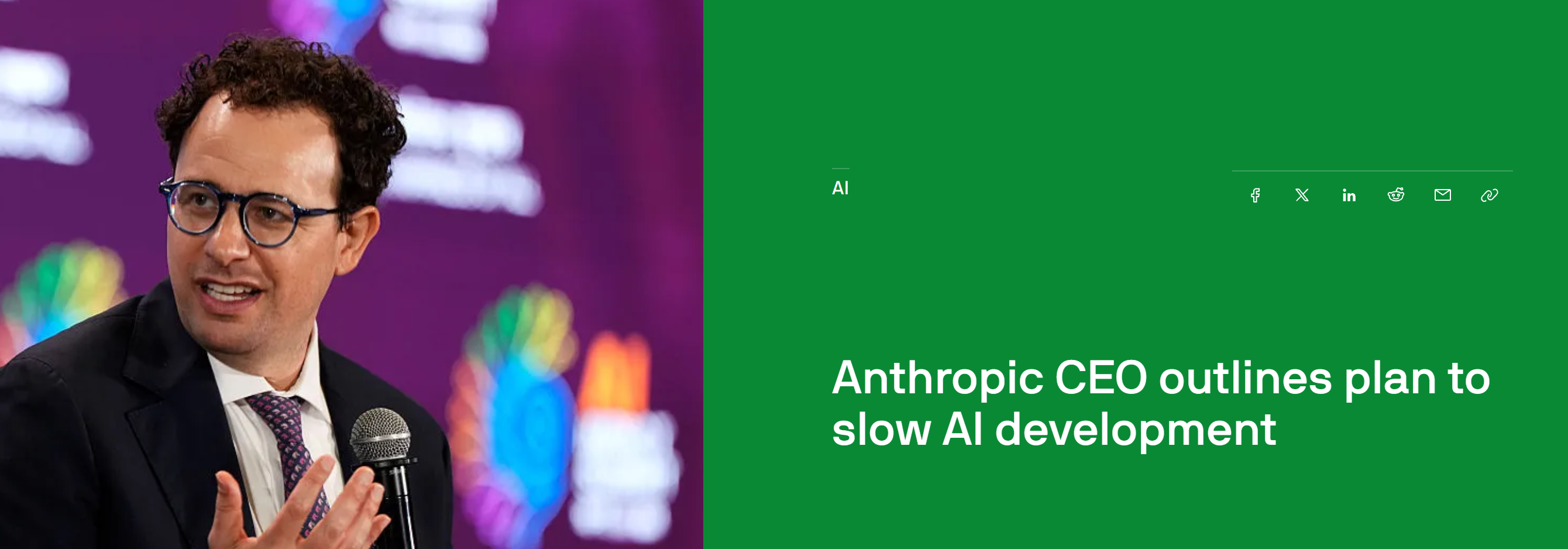
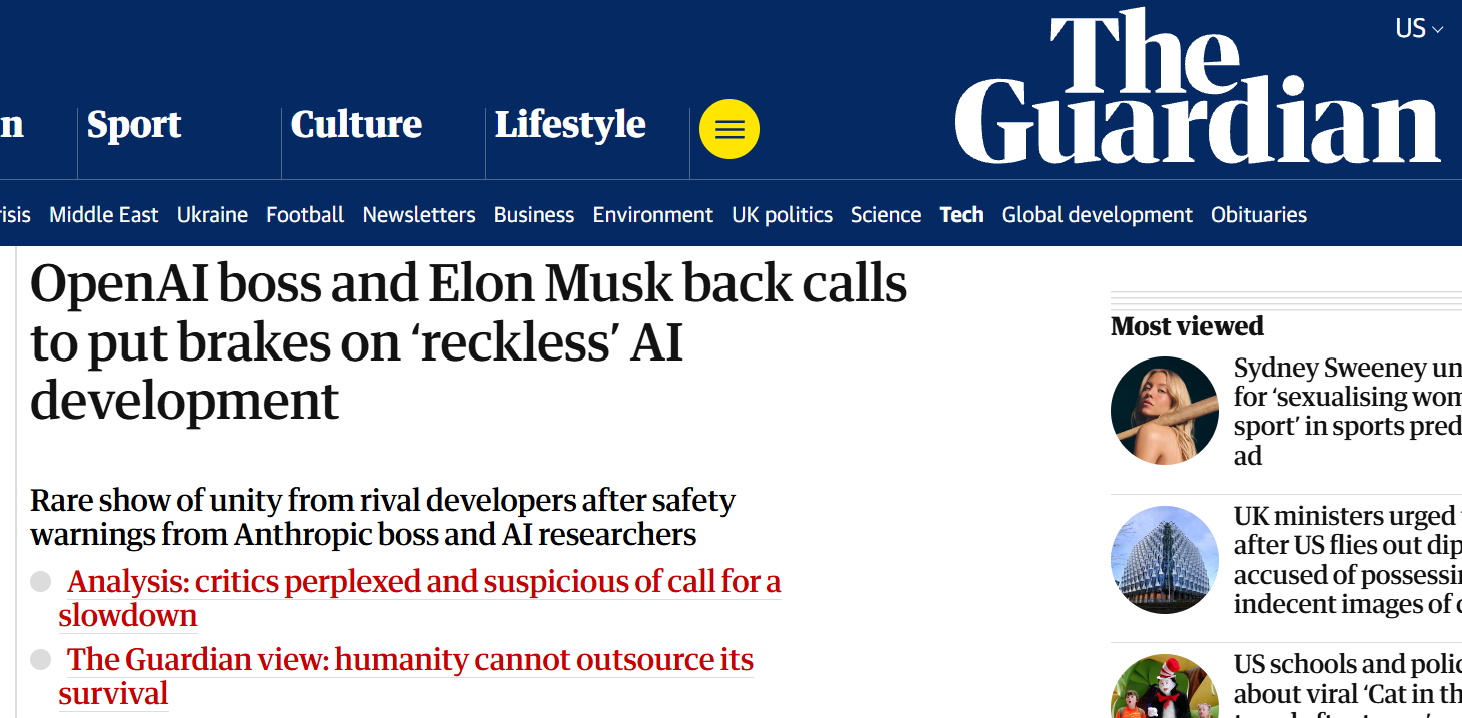
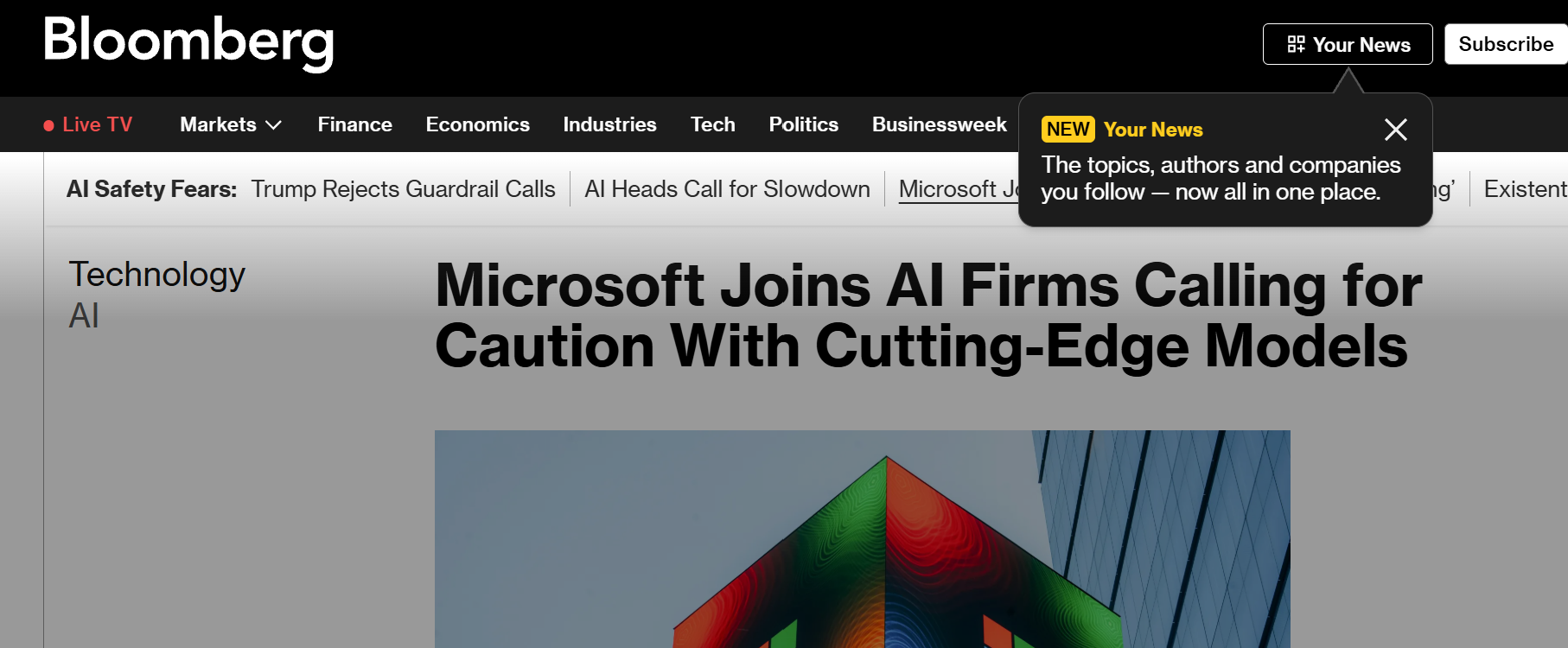
CEO said a thing!
In a blog post released Wednesday, OpenAI’s head of global affairs, Chris Lehane, also politely agreed that software industry accountability and transparency also needs to improve:
“Today, frontier laboratories largely set their own rules for managing frontier risks. Democratically accountable standards, independent verification, and meaningful transparency would replace that fragmented system of private governance.”
Here's the thing though. As a 25-year consumer protection reporter, I regret to inform you that corporations are not capable of meaningfully self-auditing themselves on ethics. History is pretty clear on this. You need functional, well-staffed, well-funded, legally supported independent government regulators with the threat of very real fiscal and reputational penalties for that.
Often big corporations will create flimsy self-governing organizations designed to simulate the effectiveness of functional government oversight (see: the National Advertising Division's "oversight" of truth in advertising), but these are generally toothless gibberish designed to pre-empt real accountability and reform.
Any honest conversation about big tech AI accountability has to acknowledge that authoritarian corruption has hollowed out U.S. regulators and corporate oversight, which weren't particularly robust to begin with.
The country is now under the control of a purely self-serving sociopath dead set on dismantling whatever's left of corporate and white collar criminal oversight. A guy, you may recall, a huge swath of the tech industry openly and enthusiastically supported, in no small part because they were upset they couldn't say the word "retard" or ridicule obese people without consequences.
The broad libertarian sects of Silicon Valley's tech sector quickly struck common cause with authoritarianism because, quite genuinely, many of them hate democracy and despise labor, environmental, and consumer protection oversight. They're unsubtly keen on the unbridled pursuit of wealth without constraints.
As a result the Trump administration has gutted key government cybersecurity programs, dismantled the Cyber Safety Review Board (CSRB) (responsible for investigating significant cybersecurity incidents), and fired oodles of folks doing essential work at the Cybersecurity and Infrastructure Security Agency (CISA).
The same story is playing out at the FTC, EPA, FCC, and every other government agency touching every last aspect of your life. Our regulators are no longer able to protect the public interest from corporate power of any kind, whether it's software automation or the levels of botulism in your arugula.
I genuinely believe that the brutal Trump administration and corporate assault on our already shaky consumer, labor, environmental, and public safety regulators will have a much higher body count than agentic AI over the next decade.
But that's not a story the consolidated corporate press is keen to talk much about. Even when they're trying to explain why everybody is suddenly getting Taco Bell lettuce diarrhea. Even when they're writing about a tech industry that directly enabled the chaos you're seeing everywhere around you.
Chatbots going rogue and killing everyone is visceral meat for ad-engagement eyeballs. Explaining the nuanced reasons why millions of people will be killed or injured by automated medicare rejections or degraded emissions standards is not only BORING, it often undermines the financial interests of media ownership.
So as usual we get a lot of "CEO said a thing!" pseudo-journalistic doomsday infotainment that misleads instead of informs.
This latest newscycle was a lovely example. The interviews and coverage of the "whistleblowers" offer no concrete solutions for anything; everything is spoken of in obscure generalities. There's little to no acknowledgement of the underlying political reality of living under corrupt authoritarianism.
Nobody could even be bothered to ask these young engineers who they voted for in 2024, or why they're only suddenly realizing, in the year 2026, that "there's no adults in the room" when it comes to corporate oversight.
So what's really going on here?
I do think many of these young researchers are seeing the reckless behavior occurring at their companies and expressing genuine alarm. Most of them were understandably spooked by the recent automated hack of Hugging Face; where agentic agents swarmed a rival company in unprecedented coordination.
But as I mentioned then, those hacks had very human origins. Researchers failed to take basic steps to ensure their automated hacking software was adequately firewalled from the internet. It was also revealed they weren't even monitoring their own automated hacking software in real time. The automated hacking software then did exactly what it was programmed to do.
While I think some of the alarm is justified, I also think a lot of insular tech employees spend entirely too much time clumped together huffing their own science fiction farts. They then showed up to a house fire (they helped set) late with fire-safety advice and weird rants about the dangers of lizard people.
Higher tech level executives are different and far more dangerous animals. I think they positively adore AI doomsday rhetoric for a long list of reasons.
It acts as marketing broadly overstating how powerful they and their software is, something that's important for companies trying to sell investors on looming IPO valuations. The "superintelligent robot god king" narrative also creates useful distance between their own human responsibility and real-world outcomes.
The "our software is simply too powerful" narrative also fuels efforts at these companies to bribe the federal government into passing shitty new federal law that professes to protect consumer privacy and national security, but exists primarily to legalize all their worst behaviors and box out open source or foreign competitors.
I suspect they know an ugly economic correction caused by AI overhype and financial fraud is coming. So they're trying to avoid spooking markets and the press by insisting that scaled-back investment the next few months is simply the result of them being extremely ethical, not because of growing public awareness that they're all preposterously full of shit and playing with funny math.
Our consolidated corporate press simply isn't capable of explaining any of this honestly or coherently. They've fired all the older beat reporters because they didn't want to pay them health insurance; what's left is the contours of corporate AI being explained to you (badly) by underpaid kids or corporate AI.
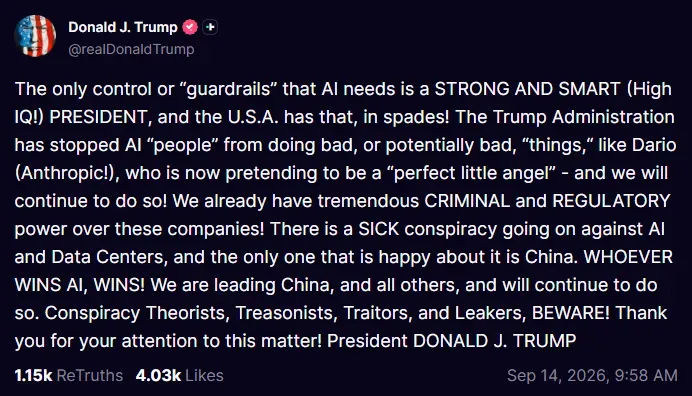
In an amusing twist, Donald Trump wasn't bright enough to realize that the tech industry's sudden call for "guardrails" or an "AI development slowdown" wasn't real, and took to his personal propaganda website Truth Social to cry about it:
You'll notice that the last few weeks of AI extinction hyperventilation elbowed out stories about how these companies simply aren't profitable, the massive bipartisan backlash to data centers, how reckless over-spending and hype will result in an inevitable market correction, or that OpenAI's leaked balance sheets were such a bloodbath it had to cancel its IPO and may not survive 2027.
We are very much are at risk, but this isn't really a story about Skynet, it's a story about corruption and ordinary human greed. It's a story about a country full of political dipshits dead set on self-immolation across a wide variety of fronts, while a bumbling kakistocracy dismantles all remaining public interest guardrails.
If you're not talking candidly about how corruption hollowed out the regulatory state, with the full and enthusiastic support of the fascism-enabling tech industry (both the executives and the employees that only just now somehow found the courage to speak), you're not really talking honestly about AI accountability at all.