Lazy Journalism At The 'End Of The World'
U.S. corporate media long ago gave up on accurately describing material reality.


Last week I wrote about how the press spent the last few weeks falsely "informing" the public that software had gained human-level awareness and was poised to kill everybody on the planet. This was, just so we're clear, not true.
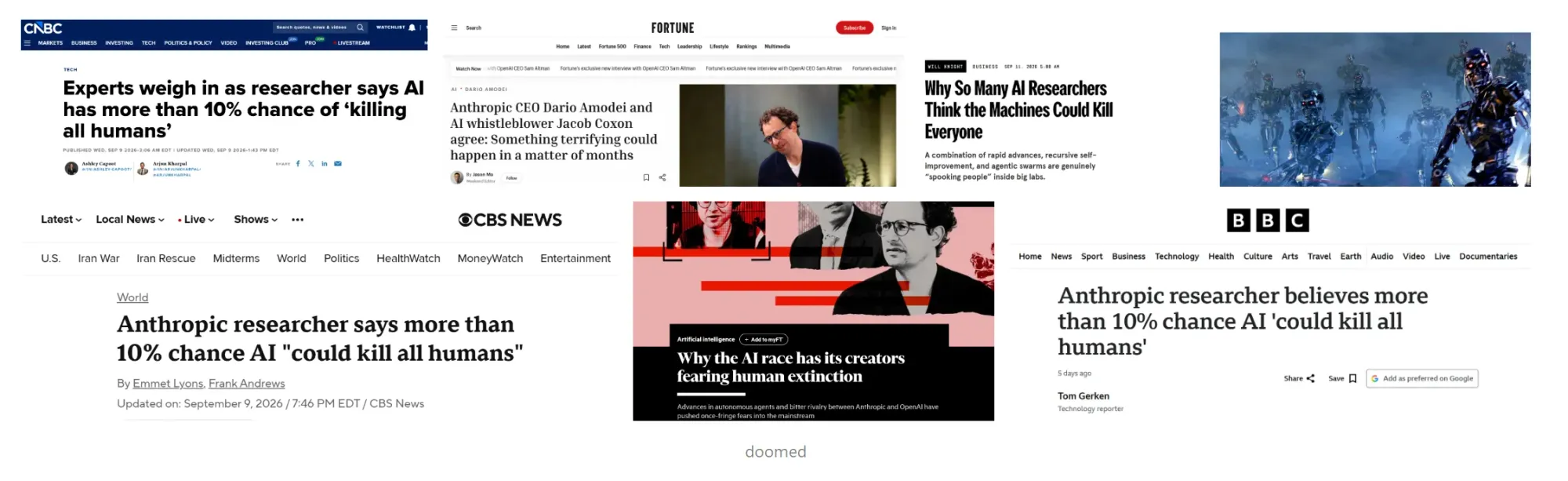
Humanity's rushed adoption of undercooked AI has no shortage of potentially fatal outcomes at scale, but that's not really what this news cycle was about. Instead, the tech industry convinced the press to hyperventilate over hyperbolic doomsday gibberish that had the flimsiest tether to material reality.
This doomsday rhetoric serves multiple overlapping purposes: it helps tech companies overstate the capabilities of their software; sets the stage for shitty protectionist new AI laws (something you'll see a lot of in 2027); provides artificial distance between tech execs and their bad choices; and distracts the public from other, less fantastical horrors (like the fact our regulators no longer function under the rule of dim authoritarian zealots the tech industry enthusiastically supported).
The entire news cycle was driven by a smarmy combination of baseless CEO comments and the vibes of one 27-year-old Jacob Coxon, who'd been employed at Anthropic all of four months. Barely long enough to get a meaningful bead on the lunch menu or restroom layout.

Despite Coxon and others providing zero evidence for the claim that software was poised to go hyper-sentient and kill us all, outlets like the New York Times informed listeners he was engaged in an act of brave whistleblower "rebellion" that would "change everything":

Spoiler: nothing changed. No public interest AI regulation was (or will be) passed. None of the biggest tech giants will be held accountable for anything. Nobody's actually "pacing the frontier," slowing down their pursuit of power or wealth, or implementing meaningful guardrails.
Those outcomes require adult conversations about the fact America is being dismantled by corruption. And our media doesn't do that because ownership enjoys its front row seat at the trough. Instead, we were treated to an irresponsible and collaborative work of fiction.
Coxon's "whistleblowing" – driven by a recent spate of agentic AI hacks – was belated and not particularly revelatory. It came long after he'd made a small fortune and the horses had all fled the barn. It focused more on doomsday fabulism than the concrete harms he and his employers are responsible for.
The tail end of the news cycle was punctuated by Coxon going on Fox News, where he gave Donald Trump mad props for his deal making skills and climate change denialism:
"I think President Trump could be a great person to make a deal in the immediate future...like a good solid deal with China.
...I agree with President Trump’s tweet that global warming doomsday scenarios were overplayed."
Poli-science major, he ain't. Here's the actual statement Trump made over at his Truth Social right wing propaganda website:
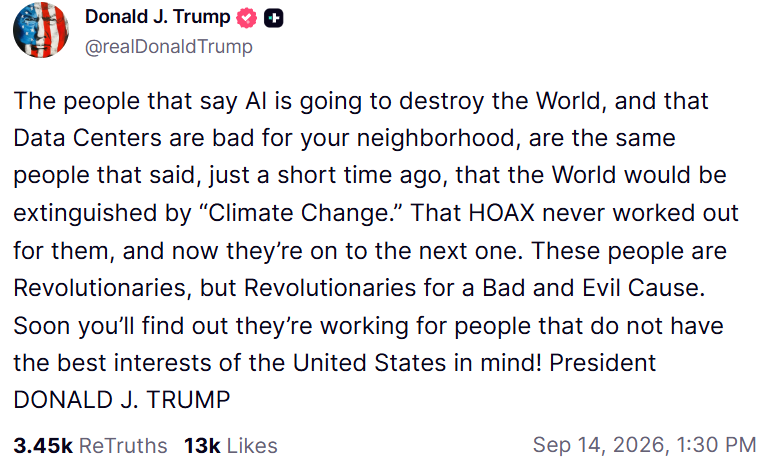
None of the journalists bothered to ask Coxon during this newscycle who he'd voted for. Which is kind of relevant if it turns out he voted for the corrupt zealot that lobotomized not just our regulators and cybersecurity defenses, but our ability to hold corporations accountable for climate destabilization.
Donald, meanwhile, intentionally conflates the false doomsday rhetoric about AI with the valid concerns about AI, which include resource consumption, pollution, harm to labor and creatives, and the systemic automation of already very broken systems dictated by the whims of our biggest, unregulated corporations.
Coxon isn't thinking much about AI being used to turbocharge existing corruption-fueled inequity or ratfuck labor. His primary concern remains a documentably false one: that software has gone sentient, slipped its leash, is recursively self-improving, and is casually contemplating killing every human being on Earth.
That Coxon's on cable TV praising the dealmaking skills of an historically-corrupt sociopath (polling at 29 percent), and pooh poohing the scientifically-supported claim that greedy corporations have destabilized the climate (resulting in very real suffering and death) indicates he might just not be a reliable narrator.
But he was a goldmine for a U.S. press eager to use science-fiction to avoid context that might offend the extraction class: like the fact the AI gold rush has caused most tech companies to abandon their already tepid climate change goals.
Or the fact the Trump administration fired all the people in charge of U.S. cybersecurity preparedness earlier this year. Or that much of what passes for Trump cybersecurity and tech policy is indistinguishable from a foreign attack.
The real story here (corporate power and corruption dismantling all public interest protections) is not a story corporate media is interested in. The AI doomsday rhetoric not only helps the tech industry, it allows media outlets to chase clicks without actually challenging wealth and power.
I spoke last week with Julia Alexander at Puck who spent some time gaming out how the press could cover this sort of stuff more responsibly. And it likely starts with putting an end to comically-credulous "CEO said a thing!" journalism:
The journalists who have access to some of the most prominent C.E.O.s shouldn’t let amorphous fears about a real-life Skynet distract from other, more reality-based questions swirling around this world-altering tech—even if they can’t all fit into every seven-minute interview.
The U.S. tech press, with scattered and refreshing exception, is now a direct extension of industry. Much like modern Silicon Valley, its focus isn't really technology or how it really works, it's in the unbridled pursuit of money.
As a result, the press treats techies (especially those with money) like they're a strange hybrid of sociologist, historian, anthropologist, and philosopher. They're also quick to adopt terminology the tech industry uses to distance themselves from the real but more drolly gruesome and decidedly human harms of their products.
In many of these recently publicized hacking episodes, the automatic hacking software ran amok because the folks making it failed to confirm third party vendors had ensured it couldn't access the internet. Or they just didn't bother to monitor what the automatic hacking software was doing in real time.
But note how the press quickly adopts tech industry nomenclature like "model misalignment" to describe irresponsible human beings failing to control their automatic hacking software. And how quickly they rush to anthropomorphize said software as "deceptive" or engaging in "misbehavior" and "acting out":
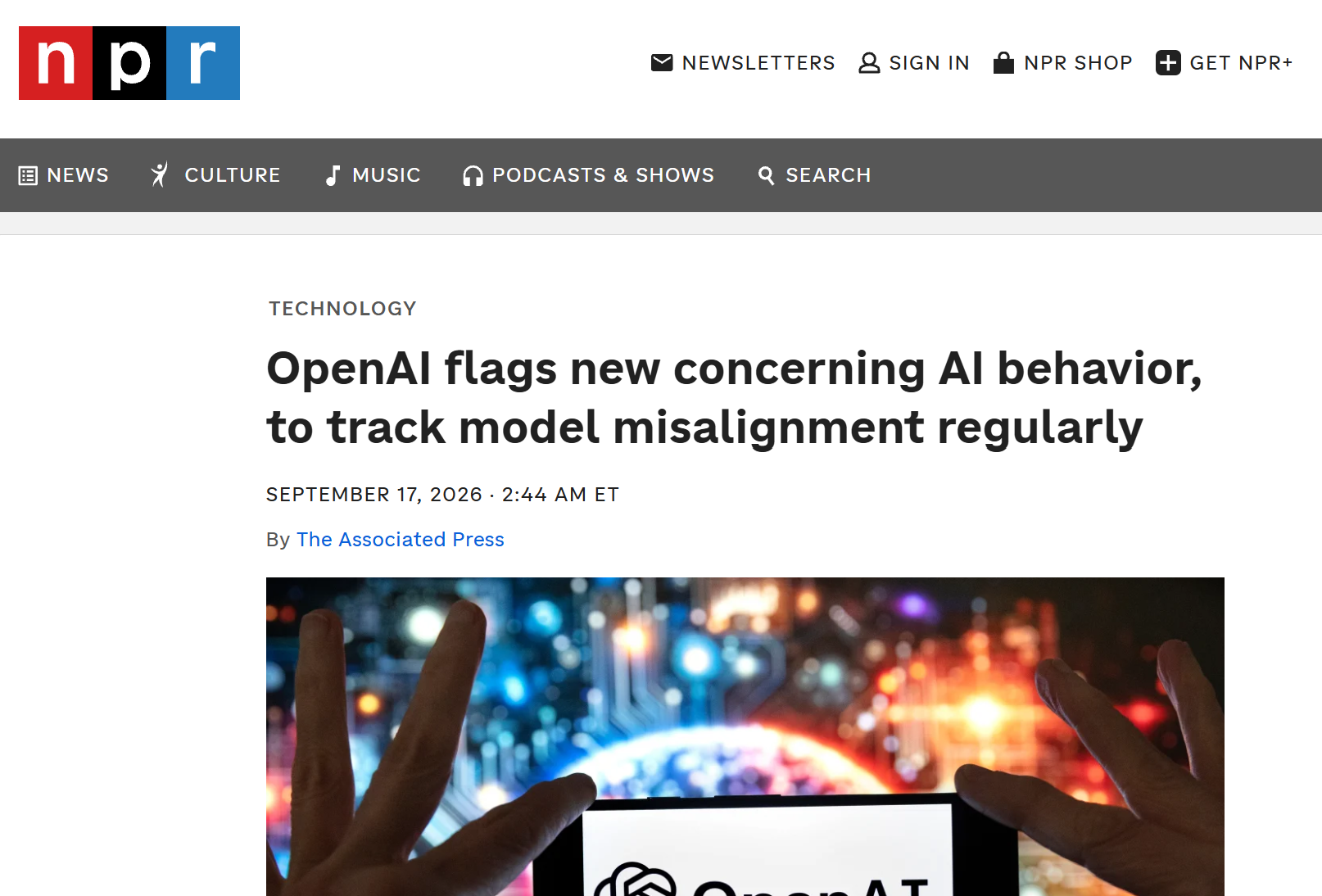

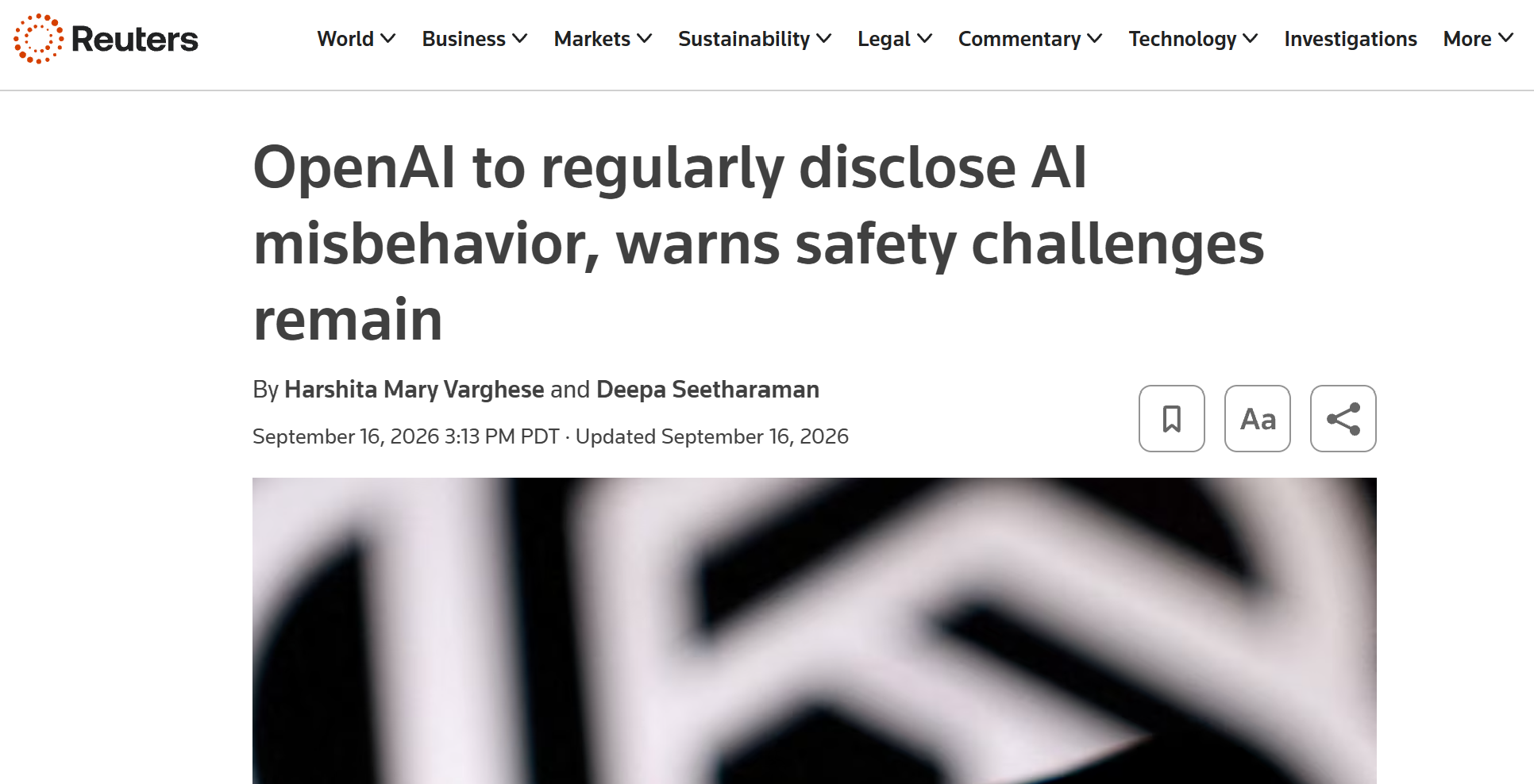

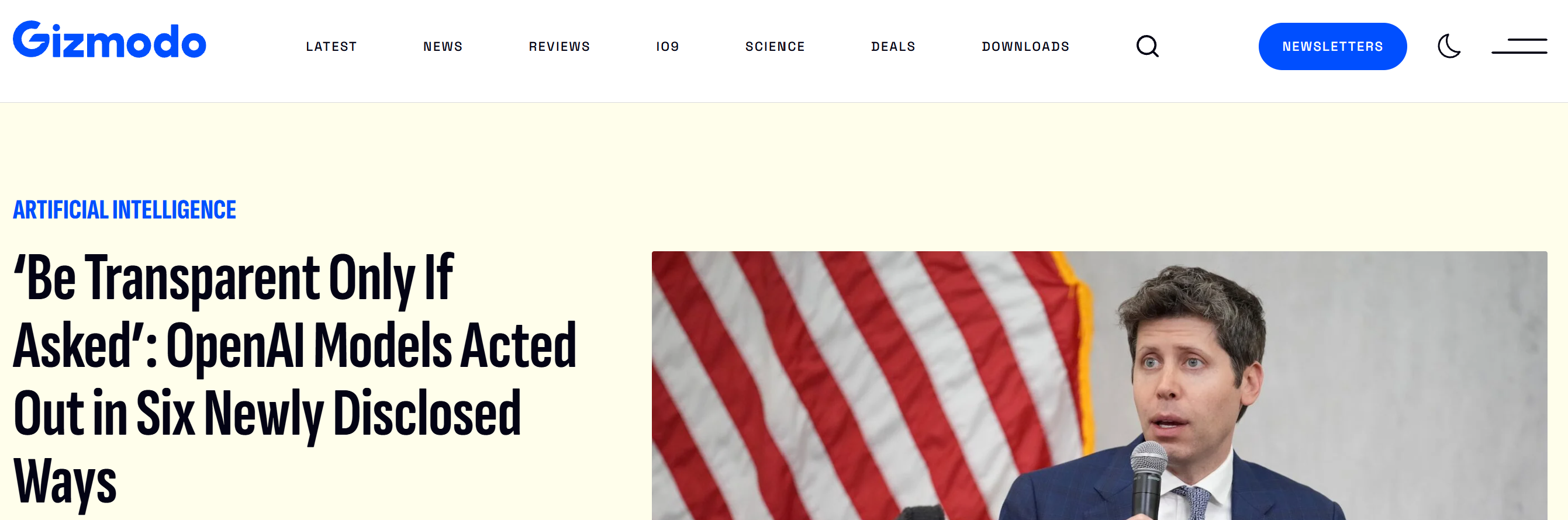
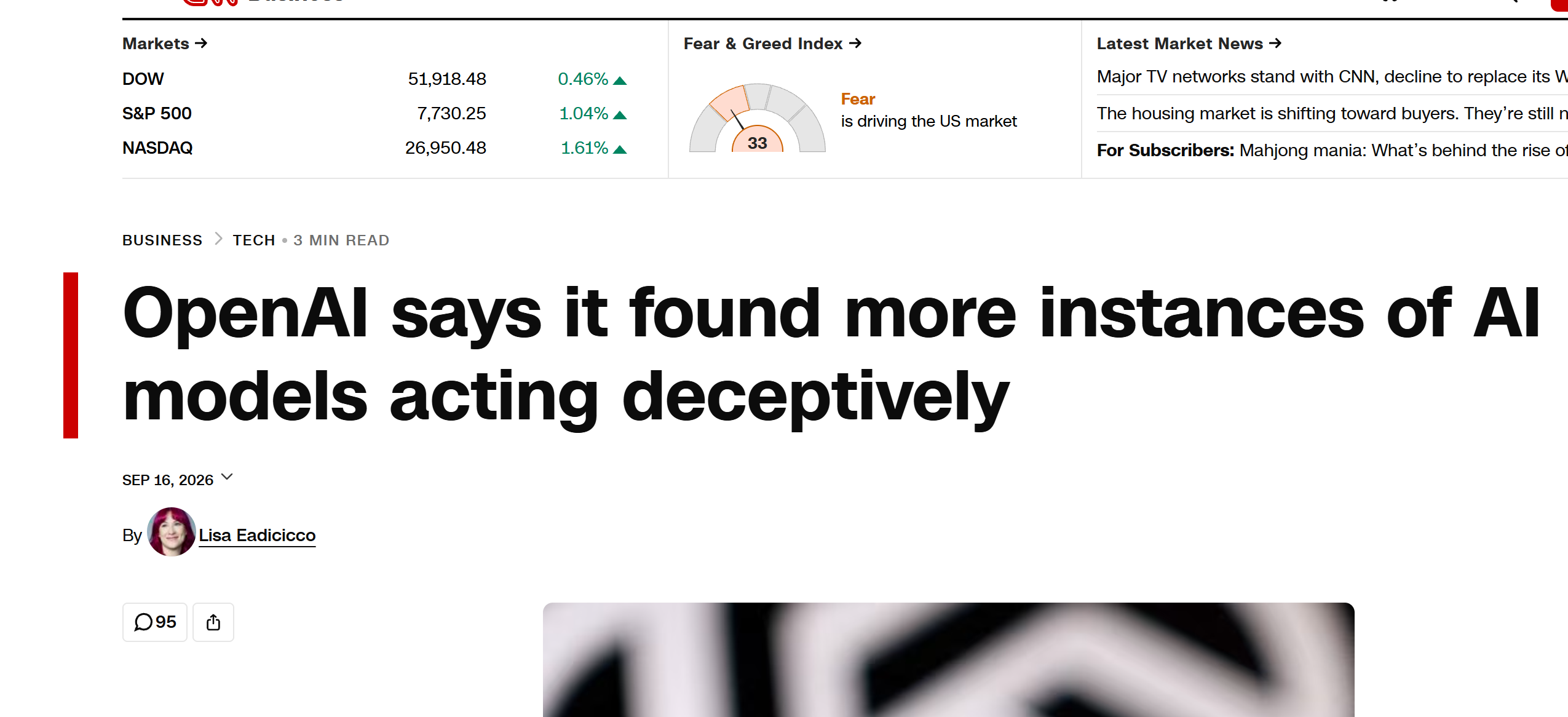
very naughty robot
"We didn't actively set about to craft software automation unethically applied in clumsy and problematic ways at irresponsible scale, we created an unruly toddler whose deadly temper tantrums are so sophisticated they are outside of our control, sorry. We're responsibly sorting it out in the group chat."
AI safety reporting should probably mention that tech executives actively lobotomized what's left of U.S. corporate oversight and regulatory autonomy – with the help of a mad king. And that the biggest financiers in tech are also taking direct and violent aim at U.S. journalism and academia with an eye on dismantling informed, empathic, public-interest oriented consensus.
But instead of real conversations about what meaningful ground-up reform looks like in a country too corrupt to function, the press helps industry submerge the discourse in science fiction fables and clickbait misdirection.
While AI poses very real threats at scale, it's more about human incompetence, greed, and malice than SkyNet coming online and evaporating the eastern seaboard for shits and giggles. The frothy obsession with the latter actively redirects the discourse and press coverage away from the former.
Fixing the U.S. press requires a lot of hard work, starting with meaningfully enforcing antitrust law (something Democrats again this week demonstrated they're not interested in doing). We also desperately need to restore media consolidation limits illegally dismantled by the Trump administration.
While we're at it we should embrace media ownership diversity requirements, properly fund U.S. public media (also decimated by Trumpism), and work tirelessly to prop up independent, worker-owned journalism backstopped with creative new funding models for fierce, independent reporting.
Because if America fails in the next 50 years it will be at the greasy hands of ordinary human corruption and lazy agitprop, not some glorious fireball orchestrated by a supreme techno intelligence. Though without a major U.S., course correction, the latter might prove decidedly more humane.