Trump's New 'AI Guardrails' Are Worthless Gibberish Propped Up By A Shitty Press
Tech and media giants are desperate to convince the electorate that meaningful corporate oversight isn't necessary.


I'm obsessed with the fact the U.S. has a news industry completely disinterested in telling the public the truth.
The latest case in point: Trump met with the country's tech oligarchs yesterday to announce that they'd struck a new "AI accord." The goal: to give the impression these companies can responsibly self-regulate, and don't need any government oversight of their dodgy environmental, labor, privacy, or public safety practices.
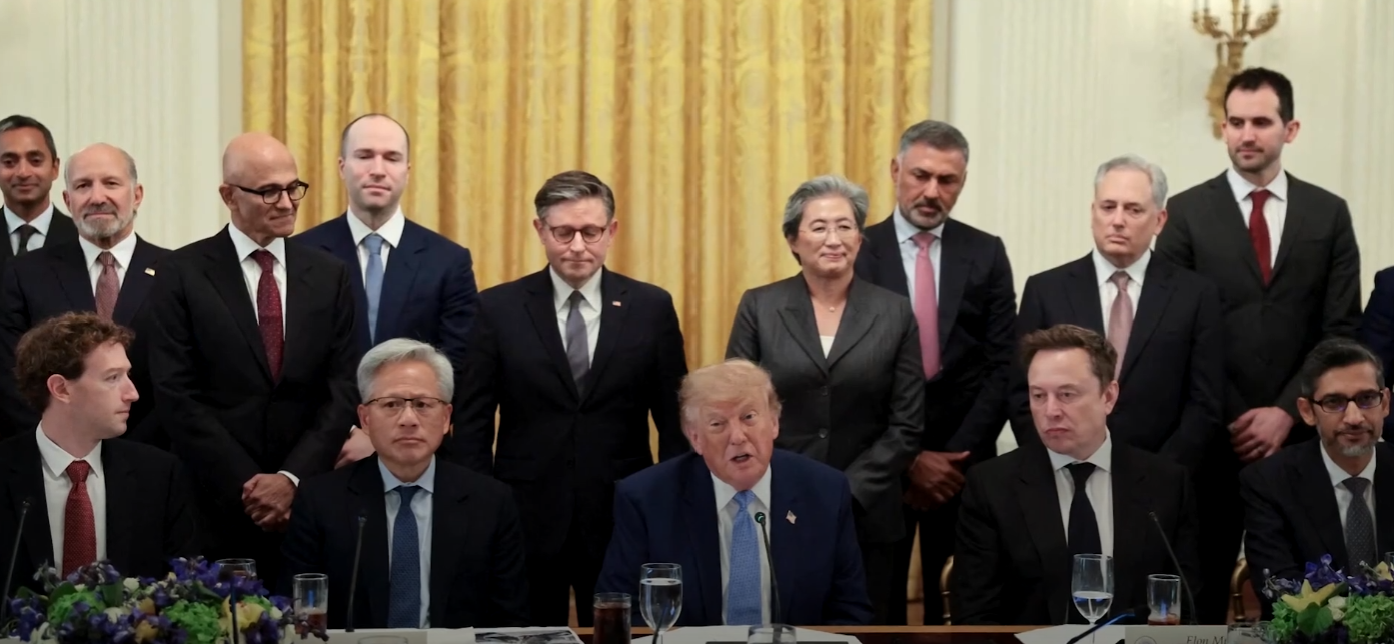
It was an elaborate performance. All of the tech industries biggest CEOs – once again demonstrating they enthusiastically support the most corrupt authoritarian the United States has ever seen – spent much of Tuesday at the White House helping Donald Trump pretend he was a real boy doing big boy things.
It didn't seem to matter that he is polling at historic lows; they showed up en masse to once again kiss the ass of autocracy.
Part of the performance involved Donald randomly deciding he was going to try and rename AI as "superintelligence" via executive order; a clumsy attempt to rebrand a tech that's increasingly-unpopular with the public due to the unethical behavior of our pasty technofascist elite.
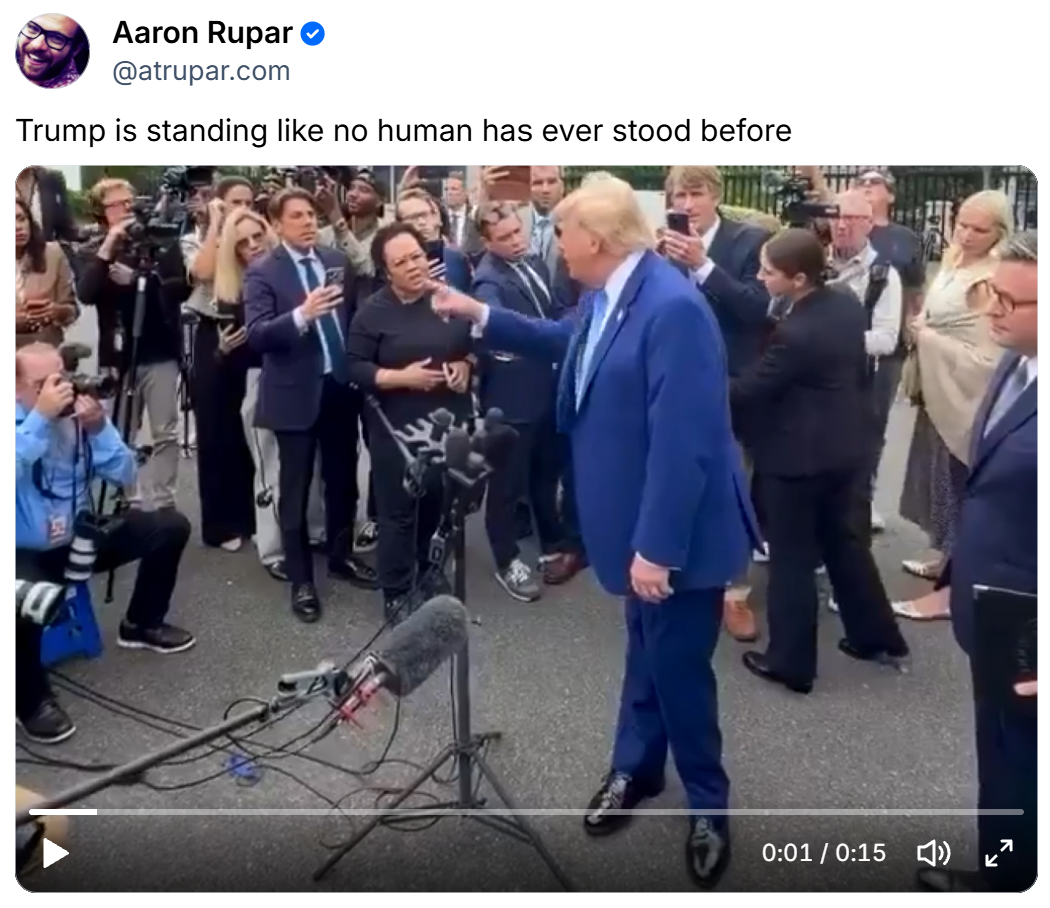
The actual AI accord is flimsy, incoherent nonsense. It's a bunch of generic, unenforceable recommendations that mean absolutely nothing, such as "perhaps you should actively monitor your automated hacking software more carefully." It was so sloppy, they couldn't even spell the United States properly.
Corporate America loves toothless "self-regulatory regimes." They're designed to give the impression you don't need public-interest regulators, environmental protections, labor rights, or meaningful privacy laws. That you can trust corporate America to monitor itself for ethical lapses.
You've seen it with stuff like the Facebook oversight board. Or the recently proposed "CNN oversight board" at Paramount. Or organizations like the BBB's National Advertising Division, which is designed to help forestall and pre-empt meaningful government action on false advertising. It's artifice.
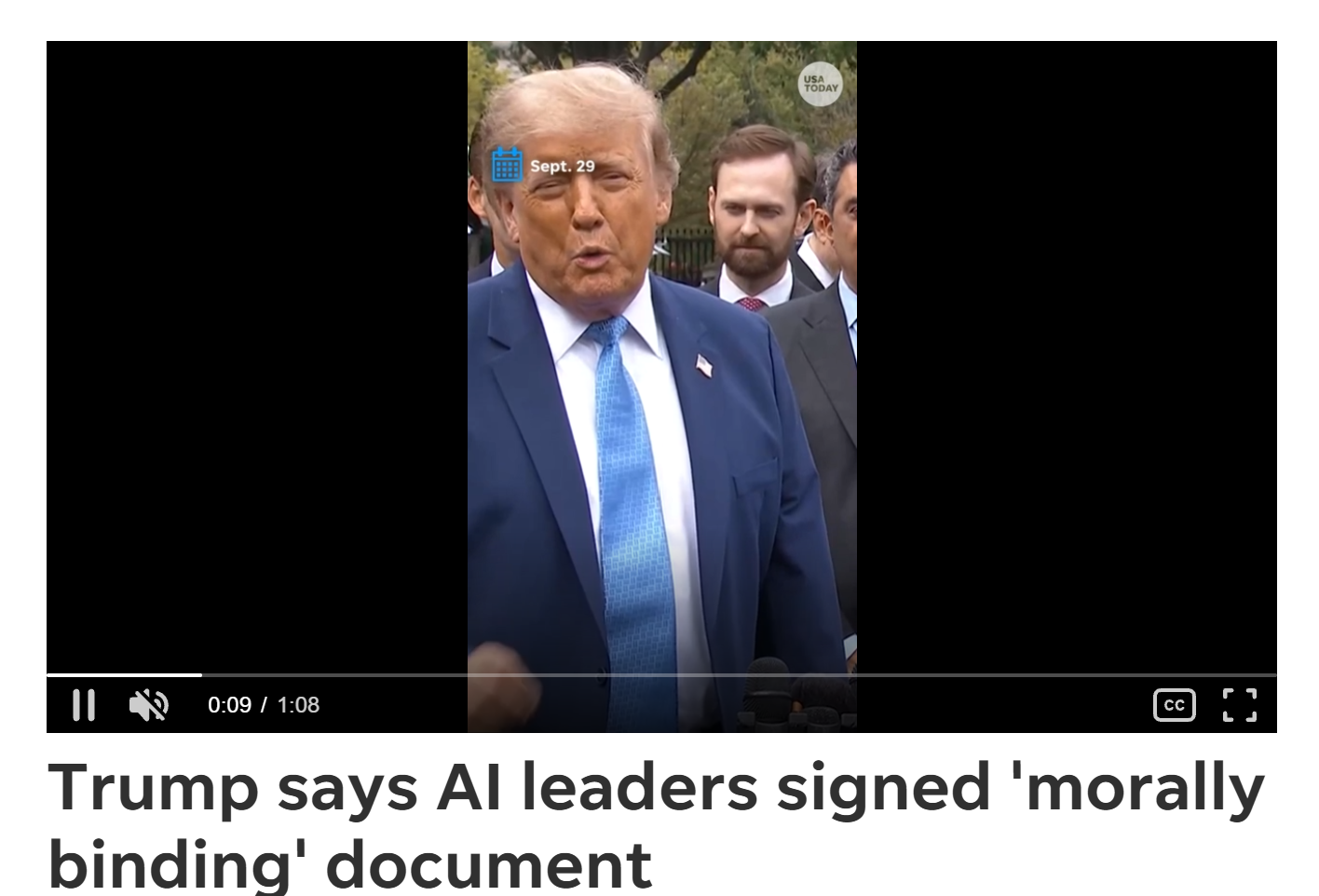
While Trump claimed the new AI accord was "morally binding," there's absolutely nothing here that has teeth. Tech companies are afraid of the massive bipartisan public backlash to data centers (which is partially a proxy for public disgust at corruption-fueled authoritarianism), so they put on a stage play.
And right on cue, America's pathetic press quickly helped portray the performance as a very real and serious thing, with many outlets putting lies completely unchallenged in headlines:
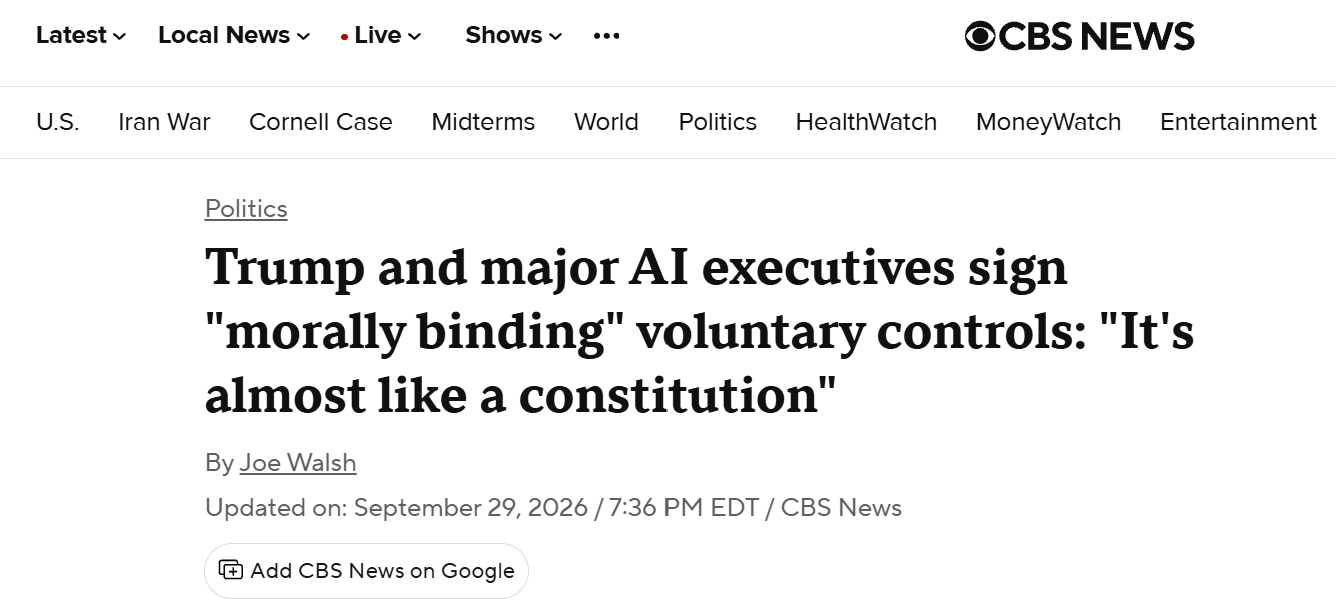
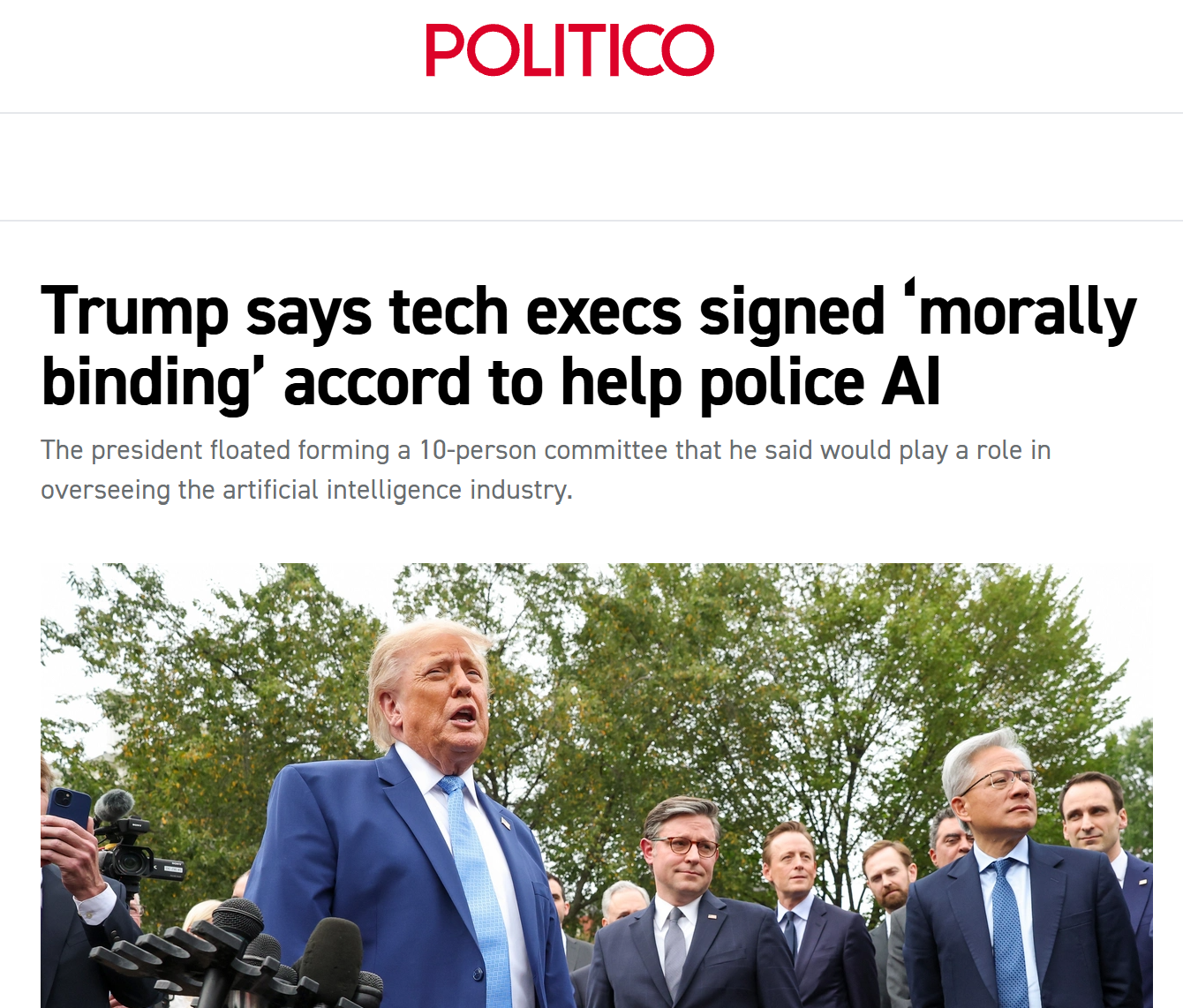
it's almost like a constitution!
It's almost like a constitution, guys!
Not only were our establishment press outlets incapable or unwilling to point out that none of this meant anything, they were incapable of communicating that Trump has taken a violent hatchet to everything from our cybersecurity defenses to our labor, environmental, and consumer protection regulators.
Down at the bottom of the fake "accord," it insists that “over time, it may make sense to codify these steps into laws or regulations.” But Trump's captured Supreme Court has issued numerous rulings ensuring that any time a U.S. regulator tries to check corporate power, they'll get slapped in the face. And our Congress, as you may have noticed, is too corrupt to function.
Again, this seems like useful context to mention if you're a journalist trying to explain the latest efforts on AI safety, but they couldn't be bothered. The corporate press has actively and unsubtly decided to pretend corruption doesn't exist, because it serves the financial interest of media ownership to play make believe.
You can wander through these Reuters, Politico, or Axios stories without the slightest hint that any of this might not be on the up and up. It's a bizarre sort of journalstic simulacrum that looks and smells a bit like journalism, but is as hollow as a Dollar Store fake chocolate Easter bunny.
U.S. corporate business and tech press is predominantly just lazy fanfiction for wealth-obsessed MBAs who believe government regulation exists exclusively to "stifle innovation" and bum them out, dude.
It's embarrassing that the U.S. electorate has to go visit marginalized independent newsletters and blogs to get an accurate read on objective reality, but that's the world that corporate power and their autocratic allies have spent a generation carefully building (see my piece from last year at Dame Magazine).
To be clear, several of the high-profile agentic AI hacks in recent months attributed to doomsday sentience were in reality just big and unethical companies failing to do very basic things: like confirming third-party vendors had adequately isolated their automated hacking software from the internet, or failing to monitor their automatic hacking software in real time.
Of course they're not doing a great job on this sort of thing because they're all hungrily eyeing multi-trillion dollar IPOs based largely on fraudulent accounting and are in a mad dash toward the trough.
They're also not doing a better job because they know their support for a corrupt autocrat also involves him defanging corporate oversight and the federal regulatory state, ensuring no real penalties or liability.
Their goal, in perpetuity, is the obscene accumulation of wealth free of literally any meaningful constraints. And they've made historic strides in ensuring public interest governance is incapable of getting in their way.
A functional press would make this dangerous kayfabe apparent to the electorate.
Instead, we get a sad and soggy pantomime.